


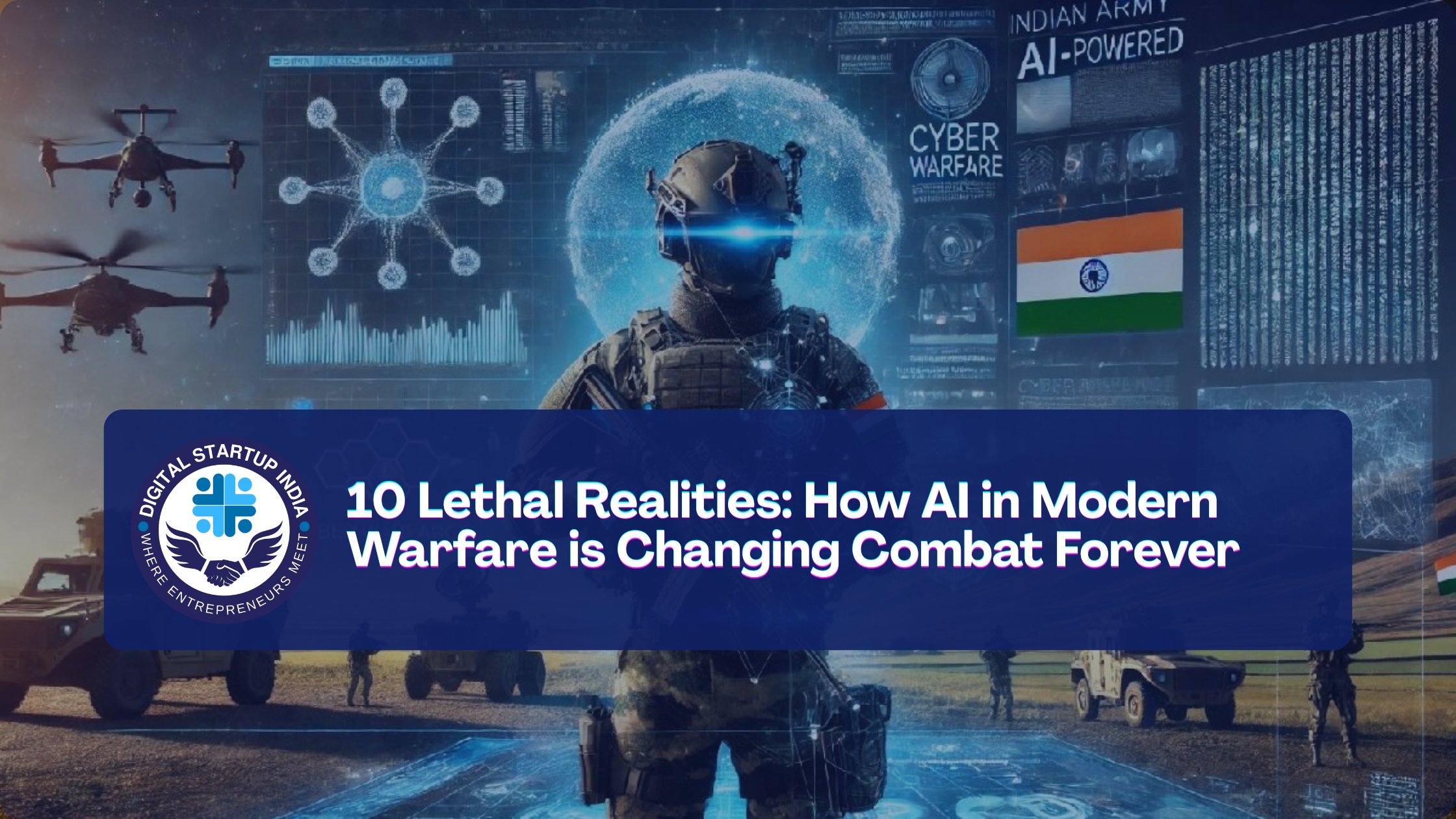
10 Lethal Realities: How AI in Modern Warfare is Changing Combat Forever
Table of Contents
-
10 Lethal Realities: How AI in Modern Warfare is Changing Combat Forever
- The Dawn of the Silent Revolution
- 1. Autonomous Weapons Systems and Lethal Decision-Making
- 2. Predictive Analytics in the Theater of War
- 3. AI in Modern Warfare: Enhancing Logistics and Sustainment
- 4. The Rise of Cognitive Electronic Warfare
- 5. Cyber Warfare and Autonomous Defense
- 6. Training and Simulation through AI
- 7. Human-Machine Teaming (Centaur Systems)
- 8. The Ethical Paradox of Artificial Intelligence
- 9. Naval Dominance and Unmanned Undersea Vehicles
- 10. Space-Based AI Reconnaissance
AI in Modern Warfare is no longer a concept confined to the pages of science fiction. It is the defining technological shift of the 21st century, fundamentally altering how nations project power and defend their borders. As we enter 2026, the integration of machine learning into defense systems has moved from experimental labs to the front lines of global conflict zones.
The Dawn of the Silent Revolution
In the first 10% of this analysis, we must acknowledge that AI in Modern Warfare represents a “third revolution” in military affairs, following the invention of gunpowder and nuclear weapons. Unlike previous shifts, this revolution is often invisible, occurring within the silicon of processors and the hidden architecture of neural networks.
1. Autonomous Weapons Systems and Lethal Decision-Making
The most discussed aspect of AI in Modern Warfare is the development of Lethal Autonomous Weapons Systems (LAWS). These platforms can identify, track, and engage targets without direct human intervention.
Drone Swarms: Utilizing collective intelligence to overwhelm air defenses.
Precision Loitering Munitions: Systems that “hunt” for specific electronic signatures.
To understand the global debate on these systems, you can review the latest reports from the International Committee of the Red Cross (ICRC) on autonomous weapons.
2. Predictive Analytics in the Theater of War
A core component of AI in Modern Warfare is the ability to process “Big Data” faster than any human staff officer. Predictive algorithms analyze satellite imagery, social media feeds, and intercepted communications to forecast enemy movements before they happen.
3. AI in Modern Warfare: Enhancing Logistics and Sustainment
Victory is often determined by who can supply their troops more efficiently. AI in Modern Warfare streamlines the supply chain by predicting mechanical failures in vehicles and optimizing fuel distribution routes to avoid ambush zones.
4. The Rise of Cognitive Electronic Warfare
Modern battlefields are saturated with signals. AI warfare transformation analysis allows for “cognitive” electronic warfare, where systems learn to jam enemy frequencies in real-time while protecting friendly communications from similar attacks.
5. Cyber Warfare and Autonomous Defense
The digital front is where AI in Modern Warfare moves at light speed. Autonomous agents are now used to defend critical national infrastructure, identifying and neutralizing malware in milliseconds—speeds that would be impossible for human programmers.
6. Training and Simulation through AI
Soldiers are now preparing for combat in hyper-realistic environments generated by AI in Modern Warfare protocols. These simulations adapt to a soldier’s decisions, creating “living” scenarios that evolve based on the trainee’s stress levels and tactical choices.
7. Human-Machine Teaming (Centaur Systems)
The goal of AI in Modern Warfare is often not to replace the human, but to augment them. “Centaur” systems combine human intuition and ethics with the processing speed of an AI, ensuring that the final decision to fire remains in human hands while the machine handles the complex targeting data.
For a deep dive into the strategic shifts of major powers, the Center for a New American Security (CNAS) provides extensive research on AI-human integration.
8. The Ethical Paradox of Artificial Intelligence
As we integrate AI in Modern Warfare, we face a paradox: can a machine ever truly understand the laws of armed conflict? Startups and defense contractors are currently racing to build “ethical engines” that can distinguish between a combatant and a civilian with higher precision than a fatigued soldier.
AI ethics and defense research
9. Naval Dominance and Unmanned Undersea Vehicles
The silent revolution extends beneath the waves. AI in Modern Warfare is powering a new generation of Unmanned Undersea Vehicles (UUVs) that can stay submerged for months, mapping minefields and tracking submarines without risking a single sailor’s life.
10. Space-Based AI Reconnaissance
With the militarization of space, AI in Modern Warfare is being moved into orbit. Intelligent satellites can now filter through terabytes of visual data to alert commanders only when a significant change—like the movement of a missile battery—is detected.
Over the centuries war has been developing together with technology. Since the swords and bows have led the way, the nuclear weapons and cyber-warfare have all been marked by new hands that shift the balance of power. We are now entering a new era of military change, which is brought about by artificial intelligence in contemporary war. This change is occurring in a low profile yet high speed transforming the way countries prepare and waging wars.
After all, nowadays artificial intelligence is no longer science fiction. It has become a strong power that has affected various industries like the healthcare industry, finance industry, transport sector, and cybersecurity. The same AI warfare technology is currently being incorporated into defense systems, which forms smarter and more responsive military capacities.
The military technology of AI is rapidly becoming a common practice within modern armies to process large amounts of data, anticipate threats, enhance decision-making, and set up complex processes. Autonomous drones and advanced surveillance systems are just a few of the applications that can help militaries become more precise and faster than at any point.
The emerging trend of increased activity of AI innovation startups in the defense sector is another interesting phenomenon. The military technology market has long been controlled by big-billion military contractors, but today agile startups specializing in machine learning, robotics, and cybersecurity solutions are entering the market. These are AI-based startups, which introduce new ideas and speed of development to the world of defense technologies.
Simultaneously, this silent revolution poses some essential questions concerning the ethics, international security, and the future of warfare. What will artificial intelligence do to military strategy? What will be the place of startups and the private companies in the development of defense technologies? And what disadvantages are inherent with automated weapons and smart defense systems?
This paper examines how artificial intelligence is currently changing warfare, the technologies behind this shift, the worldwide competition to dominate artificial intelligence-based military complexes, and the future of the opportunities and challenges await
What Is Artificial Intelligence in the War.
In defense, artificial intelligence can be described as the application of sophisticated algorithms and calculation systems to handle functions that would normally be handled by human intelligence. These activities are pattern recognition, data-driven decision-making, learning, and predictive analysis.
Military artificial intelligence is applied in the framework of warfare to enhance operational efficiency, respond more quickly to any threat, and assist in the process of strategic planning.

Application of AI in Military Operations.
This is due to the massive volumes of data in modern military operations that come in the form of satellite, sensor, drone, and communication network. Human analysts cannot process this information fast enough during a critical situation acting on their own.
AI systems help by:
Computations of massive data in seconds.
Determining trends and deviations.
Anticipating possible threats.
Assisting commanders in strategy.
This is because of the speed of information analysis, and this is one of the reasons why AI-based defense systems are becoming a vital component of the modern military.
Artificial Intelligence Driven Automation in Defense.
The other significant benefit of AI in defense is automation. Contrary to the use of human intervention alone, intelligent systems may be used to carry out some functions individually.
Examples include:
Drones of surveillance that are autonomous.
Missile defense systems are automated.
Artificial intelligence threat sensors.
Robotic logistic support systems.
These technologies minimize the human labor and speed up the operations.
Modern Militaries using AI Technologies.
The most popular military technologies that use AI innovations are:
Predictive intelligence machine learning.
Surveillance and reconnaissance Computer vision.
Intelligence analysis Natural language processing.
Unmanned operations of autonomous robotics.
All these technologies are the basis of the contemporary AI defense systems.
The most important AI technologies that have revolutionized war.
Artificial intelligence is not a technology, but a set of enhanced computational tools. Warfare is changing due to a number of important technologies.
Defense Systems: Machine Learning.
Among the most significant technologies applied to AI military technology is machine learning. It helps computers to recognize patterns based on the data and get better with time.
Most machine learning startups are developing systems to assist militaries in processing and analyzing complex data and forecasting future threats.
Applications include:
Detection systems used to detect suspicious activity on surveillance data.
Predictive intelligence tools are tools that predict possible conflicts or cyber attacks.
Systems to analyze the battlefield information provided by sensors and drones.
Machine learning assists the military analysts in making well-informed and rapid decisions in the field.
Unmanned Aerial Vehicles and Robotics.
The usage of AI-driven drones and robots is one of the most obvious cases of autopilot military technologies.
Autonomous drones can:
Carry out surveillance operations.
Patrol borders and warring areas.
Target recognition with computer vision.
Be able to be operated without necessarily being under human control.
Intelligent systems are also being utilized in:
Explosive ordnance disposal.
Logistics support
Surveillance missions to risky places.
These systems minimize risk to the soldiers and maximize operations.
Generative Artificial Intelligence and Strategy Simulation.
Another new technology in the field of defense innovation is generated AI. Although typically applied in the context of content generation e.g. by creating images and text, startups in generative AI are also considering its use in military planning and simulations.
Generative AI can help with:
Designing war simulation games that are realistic.
Role playing possible conflict situations.
Finding the strategic responses under virtual conditions.
These simulations can also be used by military planners to prepare their operation in complex situations before they arise in the real world settings.
AI Powered Cyber Warfare
Contemporary warfare is growing into a battlefield in the area of cybersecurity. Cyber attacks have the potential to interfere with communication systems, financial systems and infrastructures.
Governments are increasing their cyber defense capabilities with the assistance of AI technologies.
Uses of AI-based systems of cyber warfare defense include:
Identification of suspicious network activity.
Determining patterns of cyber attacks.
Incident response system automation.
Anticipating digital infrastructure vulnerabilities.
There are quite a few AI driven start ups that are developing cybersecurity applications that are dedicated to defense and national security.
AI in Warfare Real World Applications.
Already, artificial intelligence is present in a number of practical military applications. The technologies enhance efficiency, human risk reduction, and situational awareness.
The following are some examples of AI analytics and defense applications in the battlefield.
AI Powered Surveillance
Computer vision is used to examine images and videos of drones, satellites, and security cameras with the help of AI-based surveillance systems.
These systems can:
Detect unusual activity
Appropriate vehicles and people.
Surveillance of vast territories.
This enhances the intelligence collection and border security.
Autonomous Combat Drones
Drones can be programmed to carry out complicated missions with a little human interference.
Their capabilities include:
Long-distance reconnaissance
Target identification
Precision strikes
These systems are proving to be a significant component of contemporary military tactics.
Predictive Battlefield analytics.
Artificial intelligence-based analytics tools are capable of analyzing data on past battles and those going on in the field to provide a projection of what may happen next.
Benefits include:
Better mission planning
Better distribution of resources.
Quick adaptation to the conditions.
Artificial Intelligence Logistics and Supply Chain Optimization.
Military activities need elaborate logistics systems to transport equipment, food and medical supplies.
The AI tools are able to optimize the logistics by:
Predicting supply needs
Determining effective transportation lines.
Reducing operational costs
Intelligence Systems in the Military.
Intelligence systems that are powered by AI process communication information, satellite images, and intelligence reports to detect possible threats.
These systems enhance the intelligence analysis speed and accuracy.
The Global AI Arms Race
AI is quickly being used as an important element in international military rivalry. Nations worldwide are putting a lot of money in AI war technology so as to have strategic benefits.
United States
The US has initiated a number of military innovation initiatives concerning AI defense.
Programs focus on:
Autonomous systems
Cybersecurity
Intelligence analysis using AI.
Another area where AI innovations and the U.S. Department of Defense are working on is the rapid development of technology.
China
China has made the aspiration of becoming a leader in artificial intelligence around the world. The nation is also spending a lot of money on AI research, including the military.
The Chinese military programs are concerned with:
AI-powered drones
surveillance technologies
automated defense systems
Russia
Russia has also focused on the significance of AI in military strategy. The nation is coming up with independent weapons and military robots.
European Defense Programs and NATO.
NATO partners and European countries are cooperating to develop AI defense capabilities to make systems more secure and technologically advanced.
These programs focus on:
cybersecurity
intelligence analysis
self-directed defense vehicles.
It is an issue of strategic significance to note that AI military technology is increasingly important in global security as a result of this growing competition.
AI Startup In Defense Technology.
In the past, the development of defense technologies was a preserve of mega corporations. Nevertheless, the emergence of AI start-up ecosystems has brought new market entrants into the defense market.
AI Innovation Startups Role.
Startups come with a number of benefits:
Faster innovation cycles
Professional knowledge of AI technologies.
Agile development processes.
The following are some of the areas that many AI innovation startups are interested in:
machine learning analytics
cybersecurity
autonomous systems
defense robotics
Defense Technology Accelerators.
Defense innovation programs are established by many governments to boost the efforts of the startups in the military technologies.
These programs provide:
funding opportunities
mentorship
research partnerships
Venture Capital Investment
Defense technologies are the AI driven startups that are increasingly receiving investment funds by investors.
The underlying interest in this trend of investment is:
autonomous defense systems
AI-powered cybersecurity
military robotics
Cooperation between Governments and Startups.
Governments are collaborating with startups in order to speed up the development of AI defense systems.
Through these partnerships, startups can experiment and implement new technologies in practice.

Ethical Concerns and Challenges.
Although there are numerous benefits of artificial intelligence, concern exists that the technology can have numerous negative effects in terms of safety, ethics, and regulation.
Autonomous Weapon Risks
Robotized weapons with the ability to make deadly judgments cause serious ethical concerns.
Concerns include:
lack of human oversight
possible abuse of self-driving.
escalation of conflicts by accident.
AI Warfare Ethical Concerns.
According to many professionals, life and death should not be left to machines to make decisions.
A discussion concerning regulations to regulate the development of autonomous weapons is going on in the international community.
International Regulation Problems.
It is challenging to develop a set of regulations on AI technology in the military since various nations possess distinct strategic concerns.
Nonetheless, collaboration between different countries will be necessary in order to avoid abuse.
Cybersecurity Risks
Systems of AI may also become the victims of cyber attacks.
Hackers could attempt to:
manipulate AI systems
interfere with military activities.
access sensitive data
The defense systems based on AI require ensuring a high level of cybersecurity.

Future of AI in Warfare
It is projected that the future of AI in war will also have even further advanced technologies.
There are a number of new technologies that would transform military strategies.
Artificial Intelligence Battlefield decision systems.
The next generation AIs can support commanders by giving real-time advice when military personnel are carrying out their missions.
Such systems might be able to analyze various sources of data and propose the best strategies.
Forecasting Military Intelligence.
The predictive intelligence tools are AI-based systems that might assist the governments in predicting the conflicts and avoiding crises.
Robotic Warfare Systems
Uncrewed robots can be used in very risky tasks of reconnaissance and bombing.
Such systems minimize dangers to the human soldiers.
Artificial Intelligence Assisted Defense Strategies.
It is also probable that artificial intelligence will be one of the key points in the planning of national defense.
New hi-tech analytics and simulations will assist governments to be ready to face complicated security problems.
Conclusion
The future of warfare is silent but is being redesigned in artificial intelligence. Intelligent surveillance systems, autonomous drones, predictive analytics on the battlefield, and many more, AI warfare technology is changing the way the contemporary military functions.
The innovation of AI startups and machine learning startups is rapidly becoming more popular, thereby increasing the pace at which defense technologies are being developed. These enterprises are also coming with new solutions that can augment the military capability and augment national security.
Nevertheless, AI military technology also has significant ethical and regulatory issues. There should be collaboration on the part of governments and international organizations towards ensuring proper development and application of AI within the defense systems.
Moving forward, AI as a weapon of war will rely on the ability to balance innovations in technology and ethical concern. Countries that manage to embrace the power of artificial intelligence without losing the balance in the world arena will become the makers of the next era in military policy.

Empowering India’s Entrepreneurs Through AI-Driven Education and Innovation.
Faq’s
What is artificial intelligence in modern warfare?
It refers to the use of AI technologies such as machine learning, robotics, and automation in military operations and defense systems.
How is AI used in military technology?
AI helps analyze data, improve surveillance systems, automate weapons platforms, and support strategic decision-making.
What are autonomous weapons?
Autonomous weapons are systems capable of selecting and engaging targets without human intervention.
Why are AI startups important for defense technology?
AI startups bring innovation, agility, and specialized expertise that accelerate the development of modern defense systems.
How does AI improve military intelligence?
AI processes large volumes of data from multiple sources to identify patterns and potential threats.