


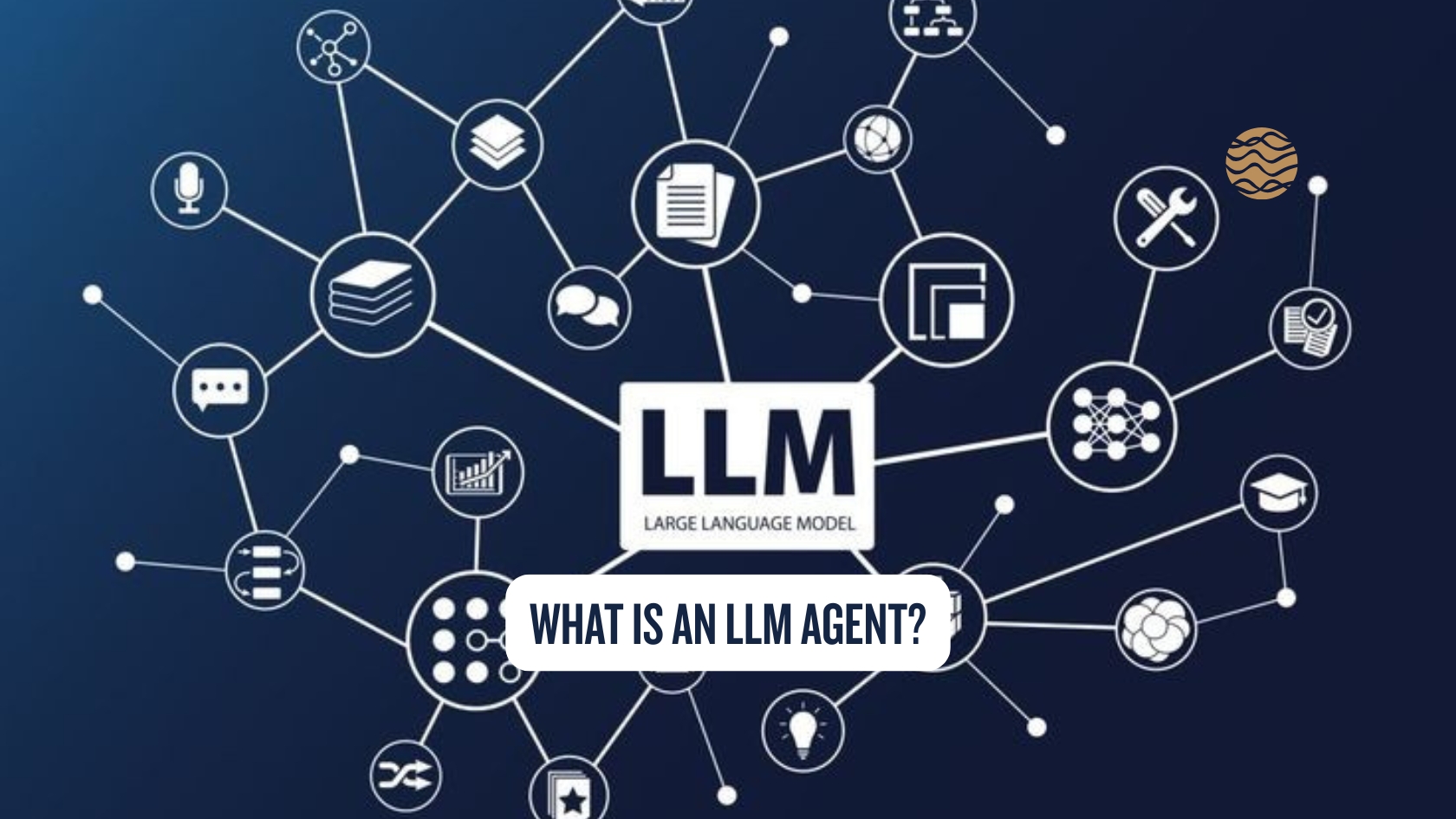
LLM Agent: 5 Incredible Ways Large Language Model Agents Automate Everything
Table of Contents
-
LLM Agent: 5 Incredible Ways Large Language Model Agents Automate Everything
- Introduction
- What Are LLM Agents? Complete Beginner Guide
- How LLM Agents Work (Step-by-Step)
- Types of LLM Agents
- 5 Incredible Ways LLM Agents Automate Everything
- LLM Agent vs Chatbot (Key Differences)
- Real-World Examples of LLM Agents
- Benefits of LLM Agents
- Challenges and Risks
- Future of LLM Agents in 2026 and Beyond
- Conclusion
Introduction
The future of artificial intelligence is no longer limited to answering questions or generating text. In 2026, AI is evolving into something far more powerful—systems that can think, plan, and execute tasks independently. This transformation is being driven by the rise of the LLM Agent, a concept that is rapidly gaining attention across industries.
An LLM Agent is not just another chatbot. It represents a shift from passive interaction to active problem-solving. Instead of simply responding to prompts, these systems can understand goals, break them into steps, and use external tools to complete tasks. This makes them incredibly valuable for businesses, developers, and even everyday users.
As automation becomes a priority for organizations worldwide, understanding how Large Language Model Agents work is essential. Whether it’s improving productivity, reducing costs, or enabling smarter decision-making, the impact of this technology is already being felt—and it’s only just beginning.
What Are LLM Agents? Complete Beginner Guide
An LLM Agent is an advanced AI system powered by a large language model that can reason through problems, make decisions, and perform actions using external tools or data sources. Unlike traditional AI systems, it is designed to go beyond conversation and actively complete tasks.
In simple terms, an LLM Agent acts like a digital assistant that not only understands what you say but also takes meaningful action based on that understanding. It can interpret instructions, plan steps, and deliver outcomes without constant human input.

How It Differs from Traditional Chatbots
A traditional chatbot is designed to respond to user queries. It processes input and generates output, but its capabilities are limited to conversation. An LLM Agent, on the other hand, has a broader scope. It can analyze complex problems, interact with APIs, and execute workflows.
This difference is crucial because it marks the transition from static AI tools to dynamic systems capable of real-world impact.
Real-World Analogy
Imagine asking a chatbot to help you plan a trip. It might suggest destinations or provide information. Now imagine an LLM Agent handling the same request. It could search for flights, compare prices, book tickets, and even create a detailed itinerary. This ability to act makes it far more powerful.
How LLM Agents Work (Step-by-Step)
Understanding how an LLM Agent works is key to appreciating its capabilities. These systems follow a structured process that mirrors human decision-making and problem-solving.
At the core, an LLM Agent operates through a sequence of steps that transform input into actionable outcomes. When a user provides a task, the agent first interprets the request. It then analyzes what needs to be done and creates a plan to achieve the desired result.
Core Workflow
User Input → Understanding → Planning → Tool Execution → Final Output
Explanation of the Workflow
The process begins with user input, which could be anything from a simple question to a complex instruction. The agent uses its underlying language model to understand the intent behind the input.
Next comes reasoning and planning. This is where the agent decides how to approach the task. It breaks the problem into smaller steps and determines which tools or data sources are required.
After planning, the agent interacts with external systems. This could involve calling APIs, retrieving data from databases, or executing code. Finally, it compiles the results and presents a meaningful output to the user.
This combination of reasoning and action is what defines Agentic AI and sets LLM Agents apart from traditional AI systems.
Types of LLM Agents
Not all LLM Agents are built the same. Depending on their design and level of autonomy, they can be categorized into different types.
Reactive Agents
Reactive agents are the simplest form of LLM Agents. They respond directly to input without maintaining long-term context or planning. Their functionality is limited, but they are useful for straightforward tasks where immediate responses are required.
Autonomous Agents
Autonomous agents represent a more advanced category. These systems can plan and execute multi-step tasks with minimal human intervention. They are capable of making decisions, adapting to new information, and completing workflows independently.
Multi-Agent Systems
Multi-agent systems take this concept even further by involving multiple LLM Agents working together. Each agent is assigned a specific role, and they collaborate to achieve a common goal. This approach is particularly useful in complex environments where different tasks require specialized handling.

5 Incredible Ways LLM Agents Automate Everything
The true power of an LLM Agent becomes evident when we look at how it is being applied in real-world scenarios. These systems are transforming industries by automating tasks that once required significant human effort.
Business Automation
LLM workflow automation is revolutionizing how businesses operate. Tasks such as report generation, data analysis, and internal communication can now be handled by AI agents. This reduces manual workload and allows organizations to focus on strategic decision-making.
Customer Support
In customer service, LLM Agents are enabling faster and more efficient support. They can handle queries, resolve issues, and even escalate complex cases when necessary. This ensures consistent service quality while reducing operational costs.
Content Generation
Content creation is another area where LLM Agents are making a significant impact. From blog writing to marketing campaigns, these systems can generate high-quality content at scale. This is particularly valuable for businesses looking to maintain a strong digital presence.
Coding and Development
Developers are increasingly relying on LLM Agents for assistance in coding tasks. These agents can write code, identify bugs, and suggest improvements. This not only speeds up development but also enhances code quality.
Personal Productivity
On an individual level, LLM Agents act as powerful productivity tools. They can manage schedules, automate repetitive tasks, and assist with research. This allows users to focus on more meaningful activities.
LLM Agent vs Chatbot (Key Differences)
The distinction between an LLM Agent and a chatbot is fundamental to understanding the evolution of AI systems.
Feature | Chatbot | LLM Agent |
Core Function | Responds to queries | Executes tasks |
Intelligence | Limited and reactive | Context-aware and adaptive |
Tool Integration | Rarely supported | Actively uses external tools |
Autonomy | Low | High |
Use Case | Customer interaction | Workflow automation and execution |
While chatbots remain useful for simple interactions, LLM Agents offer a much broader range of capabilities. They are designed to handle complex scenarios and deliver actionable outcomes.
Real-World Examples of LLM Agents
LLM Agents are no longer theoretical concepts. They are already being used in practical applications across various domains.
AI copilots are one of the most visible examples. These tools assist users in writing, coding, and decision-making by providing intelligent suggestions and automating repetitive tasks.
Another example is autonomous systems similar to AutoGPT. These agents can take a high-level goal and break it down into actionable steps, executing each step without continuous human guidance.
Workflow automation platforms are also integrating LLM Agents to streamline business processes. By connecting with existing tools and systems, these agents can manage tasks end-to-end, reducing the need for manual intervention.
Benefits of LLM Agents
The adoption of LLM Agents offers several advantages that make them highly attractive for both businesses and individuals.
Improved efficiency through automation of repetitive tasks
Reduced operational costs by minimizing manual work
Enhanced scalability by handling large volumes of tasks simultaneously
These benefits highlight why Large Language Model Agents are becoming a critical component of modern digital infrastructure.

Challenges and Risks
Despite their potential, LLM Agents come with certain challenges that must be addressed to ensure their effective use.
One of the primary concerns is hallucination, where the AI generates incorrect or misleading information. This can lead to errors if not properly monitored.
Security is another important issue. Since these agents interact with external systems and data, there is a risk of unauthorized access or data breaches.
Over-automation is also a potential risk. Relying too heavily on AI systems can reduce human oversight, which may result in poor decision-making in critical situations.
Future of LLM Agents in 2026 and Beyond
The future of LLM Agents is closely tied to the broader evolution of Agentic AI. As technology advances, these systems are expected to become more capable and integrated into everyday workflows.
One of the key trends is deeper integration with business tools. LLM Agents will increasingly connect with software platforms, enabling seamless automation across different functions.
Another important development is the rise of fully autonomous workflows. In the near future, entire processes—from planning to execution—could be handled by AI agents with minimal human input.
As these trends continue, LLM Agents are likely to become indispensable tools in both professional and personal contexts.
Conclusion
The LLM Agent represents a major step forward in the evolution of artificial intelligence. By combining reasoning, planning, and action, these systems go far beyond traditional chat-based interactions. They are capable of automating complex tasks, improving efficiency, and enabling smarter decision-making.
While there are challenges to overcome, the potential of Large Language Model Agents is immense. As we move further into 2026, their role in shaping the future of work and technology will only continue to grow.
Understanding and adopting this technology today can provide a significant advantage in a world that is rapidly becoming more automated and AI-driven.

Empowering India’s Entrepreneurs Through AI-Driven Education and Innovation.
Faq’s
What is an LLM Agent?
An LLM Agent is an AI system that can understand tasks, plan actions, and use tools to complete them automatically.
How does an LLM Agent work?
It follows a process of understanding input, reasoning, using tools, and delivering results.
Are LLM agents better than chatbots?
Yes, because they can perform tasks and automate workflows, not just respond to queries.
What is Agentic AI?
Agentic AI refers to AI systems that can act independently and make decisions without constant human input.
What are real-world uses of LLM Agents?
They are used in business automation, customer support, coding assistance, and productivity tools.