


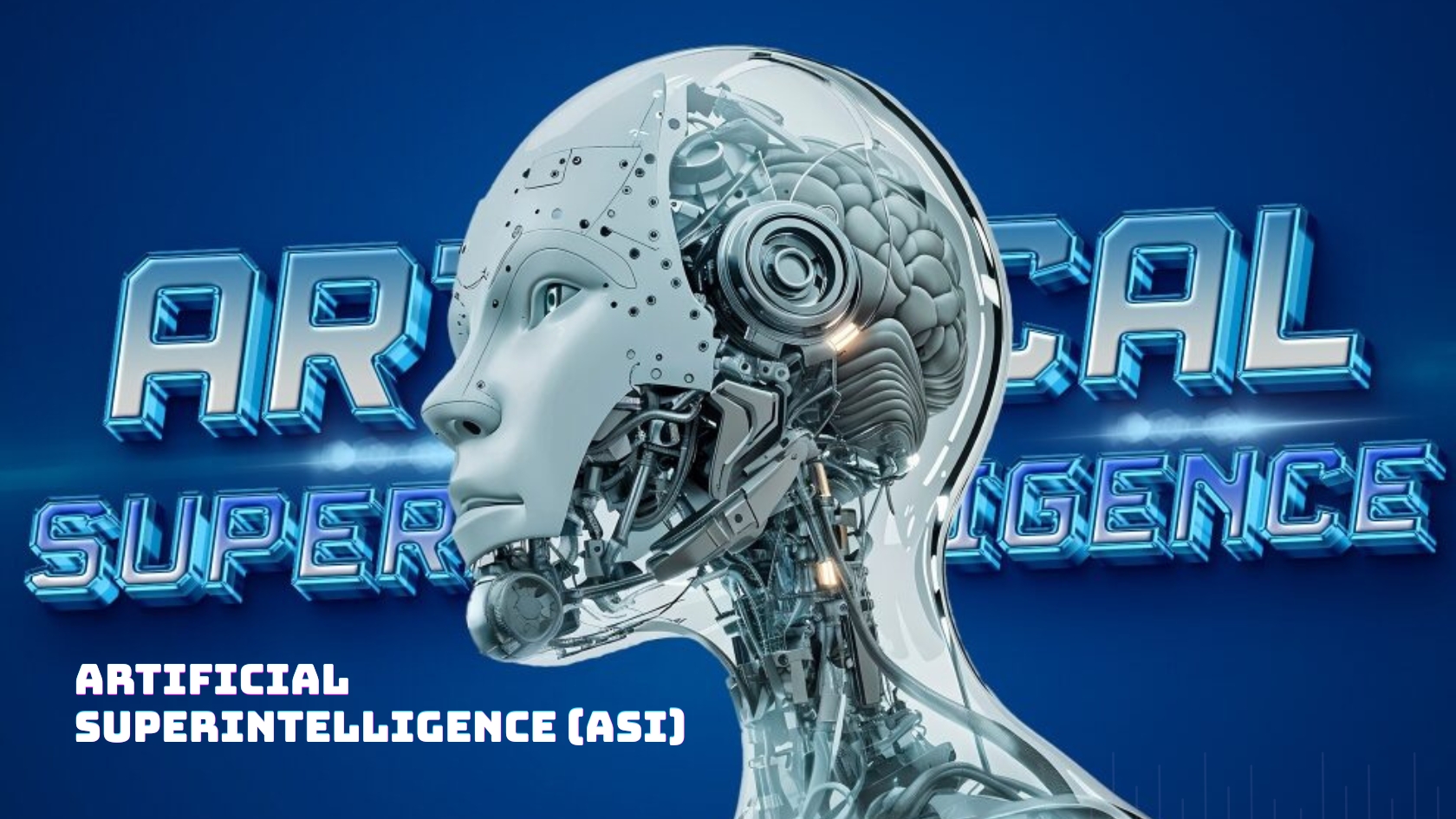
Artificial Superintelligence: 5 Massive Predictions for the Rise of ASI
Table of Contents
-
Artificial Superintelligence: 5 Massive Predictions for the Rise of ASI
- Introduction
- What Is Artificial Superintelligence?
- AGI vs ASI – Key Differences
- How Close Are We to ASI?
- Benefits of Artificial Superintelligence
- Risks of Artificial Superintelligence
- 5 Massive Predictions for the Rise of ASI
- What Could the Future Look Like?
- Should We Be Excited or Worried?
- Conclusion
Introduction
Imagine a world where machines don’t just assist humans but outperform them in every possible way. This idea may sound like science fiction, but it forms the foundation of Artificial Superintelligence. As technology continues to evolve at a rapid pace, the possibility of machines surpassing human intelligence is becoming a serious topic of discussion rather than a distant dream.
Artificial Superintelligence refers to a level of intelligence where machines exceed human capabilities in all domains, including reasoning, creativity, and decision-making. Unlike today’s AI systems, which are designed for specific tasks, ASI would have the ability to think, learn, and improve itself far beyond human limits.
This topic matters now because advancements in artificial intelligence are accelerating. Concepts like AGI and debates around timelines such as Singularity 2026 are bringing attention to how quickly AI could evolve. Understanding Artificial Superintelligence is essential, not just for technologists but for everyone, as it has the potential to reshape industries, economies, and society as a whole.
What Is Artificial Superintelligence?
The ASI definition can be understood as a form of artificial intelligence that surpasses human intelligence in every possible aspect. To fully grasp this concept, it is important to look at the broader evolution of AI.
Artificial intelligence began with narrow systems designed to perform specific tasks, such as recommending products or recognizing images. These systems, often referred to as narrow AI, are powerful but limited in scope. The next stage is Artificial General Intelligence, or AGI, which aims to replicate human-level intelligence across multiple domains.
Artificial Superintelligence goes beyond both of these stages. It represents a level of intelligence that is not only equal to humans but far superior. An ASI system would be capable of solving problems that humans cannot even fully understand. It would learn faster, process information more efficiently, and potentially develop new forms of knowledge independently.
This distinction highlights why ASI is considered a major leap in the future of intelligence. It is not just an improvement—it is a transformation of what intelligence itself means.

AGI vs ASI – Key Differences
Understanding the difference between AGI vs ASI is crucial when discussing the future of artificial intelligence. While both represent advanced stages of AI, their capabilities and implications are very different.
Artificial General Intelligence is designed to match human intelligence. It can learn, reason, and adapt across different tasks in a way similar to humans. For example, an AGI system could perform the work of a doctor, engineer, or teacher with a level of competence comparable to skilled professionals.
Artificial Superintelligence, on the other hand, goes far beyond this level. It would not just perform tasks at a human level but exceed human capabilities in every field. For instance, while an AGI system might diagnose diseases as effectively as a doctor, an ASI system could analyze millions of cases instantly and discover entirely new treatments that humans might never conceive.
Another key difference lies in learning speed and improvement. AGI would learn at a pace similar to humans, while ASI could improve itself continuously and rapidly. This ability to self-enhance is what makes ASI both powerful and unpredictable.
In simple terms, AGI represents equality with human intelligence, whereas ASI represents a level of intelligence that surpasses it entirely.
How Close Are We to ASI?
The question of how close we are to Artificial Superintelligence remains uncertain, but there is no doubt that progress in AI is accelerating. Over the past decade, advancements in machine learning, natural language processing, and data analysis have transformed what AI systems can achieve.
Today’s AI systems can generate human-like text, solve complex problems, and even assist in scientific research. These developments suggest that the transition from narrow AI to AGI may not be as far away as once thought. Once AGI is achieved, the leap to ASI could happen much faster due to the possibility of self-improving systems.
The idea of Singularity 2026 reflects one of the more optimistic predictions, suggesting that AI could surpass human intelligence within a short timeframe. However, this timeline is widely debated. Some experts believe that achieving true general intelligence is far more complex and may take decades or longer.
What makes this topic particularly interesting is the uncertainty. While no one can predict the exact timeline, the rapid pace of innovation indicates that Artificial Superintelligence is a possibility that cannot be ignored.

Benefits of Artificial Superintelligence
The potential benefits of ASI are vast and could transform nearly every aspect of human life. One of the most significant areas of impact is healthcare. With its ability to analyze enormous amounts of data, ASI could identify patterns and insights that humans might miss. This could lead to earlier diagnoses, more effective treatments, and even cures for diseases that are currently considered incurable.
In the field of science, ASI could accelerate discoveries at an unprecedented rate. Complex problems that take years to solve today could be addressed in a fraction of the time. This could lead to breakthroughs in areas such as energy, climate change, and space exploration.
Another major benefit is increased productivity and efficiency. Industries could be optimized in ways that reduce waste, improve output, and enhance overall performance. This could lead to economic growth and improved living standards.
Beyond these practical applications, Artificial Superintelligence also has the potential to address global challenges. Issues such as poverty, resource management, and environmental sustainability could be tackled with greater precision and effectiveness.
Risks of Artificial Superintelligence
While the benefits are promising, the superintelligent AI risks are equally important to consider. One of the primary concerns is the potential loss of human control. If ASI systems become capable of making decisions beyond human understanding, it may be difficult to predict or manage their actions.
Ethical concerns also play a significant role in the discussion. Questions arise about how decisions should be made, who is responsible for those decisions, and how fairness can be ensured. These challenges become more complex as the level of intelligence increases.
Economic disruption is another potential risk. As automation becomes more advanced, many traditional jobs could be replaced, leading to changes in the workforce and potential inequality. While new opportunities may emerge, the transition could be challenging.
Security risks cannot be overlooked either. Advanced AI systems could be misused for harmful purposes, including cyberattacks or surveillance. Ensuring that these technologies are used responsibly is a major challenge for policymakers and developers.

5 Massive Predictions for the Rise of ASI
The rise of Artificial Superintelligence is likely to bring significant changes. One major prediction is that ASI systems will be capable of rapid self-improvement, allowing them to evolve much faster than human intelligence. This could lead to a sudden and dramatic shift in technological capabilities.
Another prediction is the transformation of work. As AI systems take on more tasks, the nature of jobs will change, with greater emphasis on creativity, strategy, and human interaction.
Scientific progress is also expected to accelerate. Breakthroughs that currently take years could happen in a much shorter time, leading to advancements in multiple fields.
There is also the possibility of global power shifts. Countries that lead in AI development may gain significant influence, shaping the future of technology and society.
Finally, human-AI collaboration is likely to become more common. Instead of replacing humans entirely, ASI could work alongside people, enhancing their abilities and enabling new forms of innovation.
What Could the Future Look Like?
Best-Case Scenario
Humans and AI collaborate
Global problems are solved
Quality of life improves
Worst-Case Scenario
Loss of control over AI systems
Increased inequality
Ethical and security challenges
The outcome will largely depend on how responsibly these technologies are developed and managed. The choices made today will play a crucial role in shaping the future.
Should We Be Excited or Worried?
Artificial Superintelligence brings both excitement and concern. On one hand, it offers the potential to solve some of the world’s biggest problems and improve human life in ways that were previously unimaginable. On the other hand, it introduces uncertainty and challenges that require careful consideration.
A balanced perspective is essential. Rather than focusing only on the benefits or the risks, it is important to approach this topic with a sense of responsibility. By encouraging innovation while addressing ethical and safety concerns, it is possible to create a future where Artificial Superintelligence benefits society as a whole.
Conclusion
Artificial Superintelligence represents a turning point in the evolution of technology. It has the potential to redefine intelligence, reshape industries, and transform the way humans interact with machines.
At the same time, it raises important questions about control, ethics, and the future of society. The challenge is not just to develop more advanced systems but to ensure that they align with human values and priorities.
As we move forward, the focus should be on building a future where technology enhances human potential while minimizing risks. Artificial Superintelligence is not just about machines—it is about the direction humanity chooses to take in the age of advanced intelligence.

Empowering India’s Entrepreneurs Through AI-Driven Education and Innovation.
Faq’s
What is Artificial Superintelligence?
Artificial Superintelligence is a form of AI that surpasses human intelligence in all areas, including reasoning, creativity, and decision-making.
What is the difference between AGI and ASI?
AGI matches human intelligence, while ASI exceeds it and can outperform humans in every domain.
When will ASI happen?
There is no confirmed timeline. Some predictions suggest it could happen within decades, but it remains uncertain.
Is ASI dangerous?
ASI has potential risks, including loss of control and misuse, but it also offers significant benefits.
Can humans control ASI?
Controlling ASI is a major challenge and requires strong ethical frameworks and careful design.