


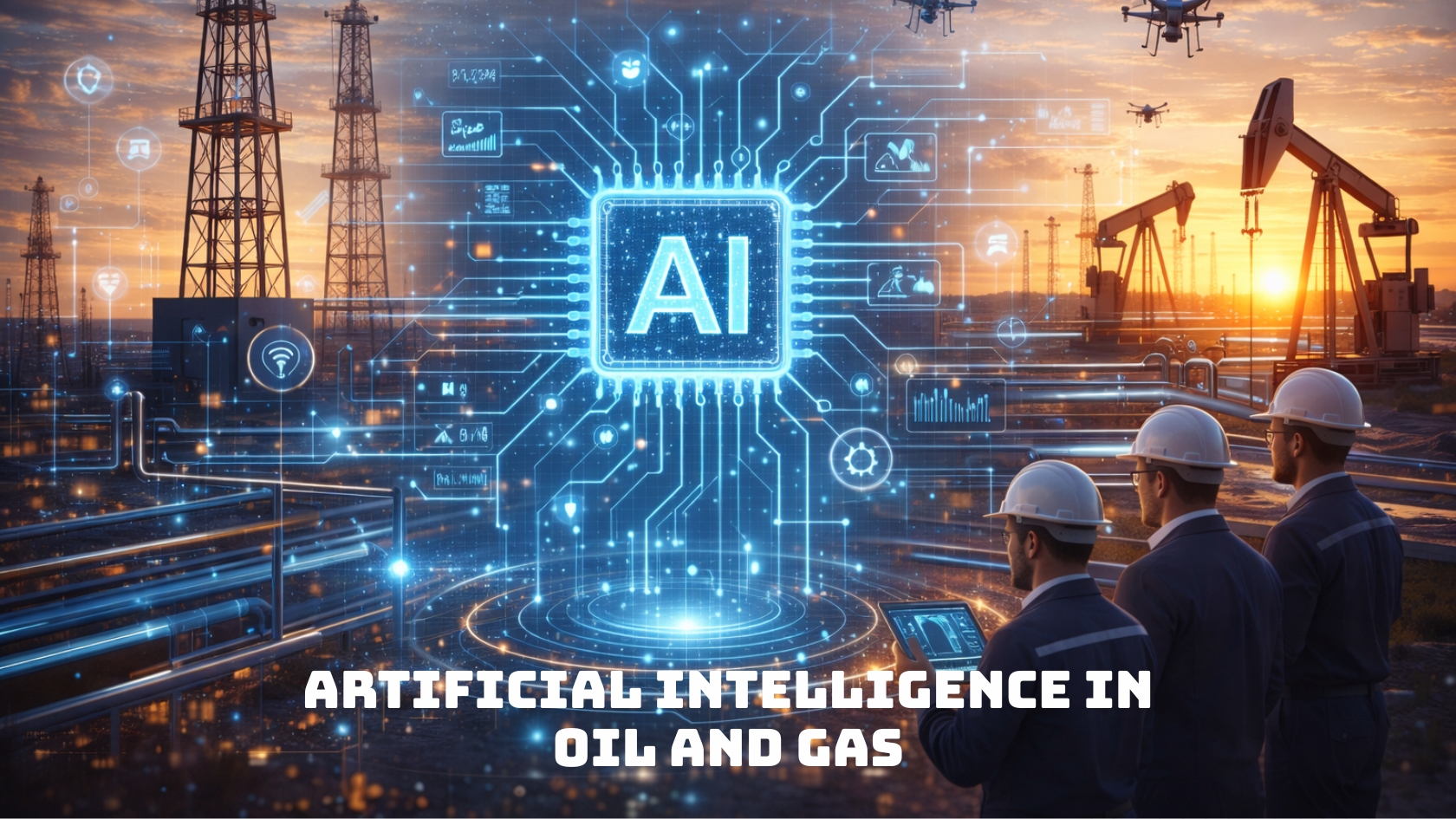
AI in oil and gas industry: 12 Incredible Use Cases for Efficiency and Safety
Table of Contents
- AI in oil and gas industry: 12 Incredible Use Cases for Efficiency and Safety
Introduction
Energy business worldwide is experiencing a significant shift, which is motivated by digital technologies and data-driven decision-making. One of these innovations is AI in Oil and Gas, which is becoming a game-changer, allowing companies to enhance efficiency and safety of their operations and decrease their costs. AI is transforming the operations of energy companies in an extremely competitive and intricate market, both upstream exploration and downstream refining.
AI is transforming multiple industries. Learn more about how Artificial Intelligence in modern business is driving innovation across sectors.
Since the oil and gas business is characterized by great risks, enormous amounts of data and vital infrastructures, the old practices can hardly provide promptness and precision. Here AI will come to the rescue, with smart automation, predictive analytics, and real-time monitoring. Organizations are now moving towards the use of AI-powered solutions to remain competitive, enhance productivity and to have safer operations.
What is AI in oil and gas industry?
AI in oil and gas industry is the application of artificial intelligence technology (including machine learning, data analytics, computer vision, and automation) to streamline numerous processes in the energy value chain. Such technologies assist businesses in analyzing big data, identify trends and make data-driven decisions with the least human involvement.
AI can easily and directly be incorporated into oil and gas processes by linking to sensors, IoT devices, and digital systems. To illustrate this, in the drilling process, AI algorithms can be used to analyze the geological data to determine the best location of drilling. In refineries, AI is used to oversee the work of equipment and identify anomalies prior to causing failures.
At Digital Startup India, we help businesses adopt modern technologies like AI for growth.
With its ability to add intelligence to operations, AI enables the traditional workflows to be smarter, faster, and more efficient. This does not only enhance productivity but also increases the chances of minimizing human error which is very imperative in a high risk setting such as in oil and gas.
Significance of AI in the Energy Industry.
The increasing use of AI in Oil and Gas is partly influenced by the fact that the industry has had to deal with the same set of challenges; high-prices of oil, inefficiencies, and other safety hazards, which are constantly growing. The energy industry is more complex and data-intensive, which is why the old fashioned approaches could not ensure the efficiency and competitiveness any longer. Artificial intelligence provides a smarter and more scalable solution by helping companies automate their businesses, process large quantities of data and make quicker and more data-driven decisions.
Processing large volumes of data on a real-time basis allows AI to be used as one of the biggest benefits of AI within the energy industry. The oil and gas business produces enormous amounts of data via sensors, drilling equipment and monitoring systems. AI technologies can swiftly process such data to determine trends, uncover abnormalities, and offer actionable information. This does not only enhance decision making but also assists in minimizing downtime and enhancing the overall operations.

Improving Productivity and Cost-effectiveness.
To understand the basics, you can read more about what is artificial intelligence.
The oil and gas industry is a business where efficiency is of paramount concern and any little gains can translate into substantial cost savings. AI is also of great use in the optimization of resource usage as it analyzes the data on operations and outlines the areas of improvement. As an example, AI can streamline the processes of drilling, supply chains, and enhance the performance of equipment, resulting in lower operational costs.
The automation of repeat activities and reducing human intervention also enhances productivity and consistency of performance of AI. This will enable firms to pursue strategic processes whilst attaining operational excellence. Consequently, AI in Oil and Gas is emerging as a necessity to organizations which want to maximize efficiency and profitability.
Enhancing Safety and Risk Management.
One of the most crucial issues in the oil and gas industry is safety. Working under hazardous conditions, using complicated machinery, and being at a distance make accidents and machines breakdowns more likely. The AIs promote real-time monitoring and risk analysis that forecasts the issues and helps to mitigate them.
Intelligent AI systems are able to identify possible safety risks prior to their developing into severe accidents. Using both historical and real-time data, AI can forecast the equipment failures, unsafe conditions, and preventive measures. Such a proactive strategy will greatly lessen the risk of accidents and provide the employees with a safer working environment.

12 Oil and Gas AI use cases that are incredible.
According to a recent AI in oil and gas industry report, companies are increasingly investing in automation and predictive analytics.
AI in Oil and Gas can be implemented throughout the whole value chain, including exploration and production, refining and distribution. These applications show how AI is changing the conventional operations into smart, data-driven operations.
Predictive Maintenance: AI will monitor the work of equipment and predict failures before they happen and minimise downtimes and maintenance expenses.
Smart Drilling and Exploration: AI can analyze geological and seismic data to determine the best drilling location and enhance the rate of successful exploration.
Reservoir Analysis: The machine learning models are used to optimize the performance of the reservoir, predicting the level of production and recovery rates.
Digital Twins: Digital models of physical objects allow real-time monitoring and simulation and optimisation of performance.
Supply Chain Optimization: AI optimizes logistics, inventory, and demand forecasting to achieve greater efficiency.
Safety Surveillance: Computer vision systems identify unsafe situations and adherence to safety measures.
Leak Detection: AI detects leaks in the pipeline in a short time, which reduces negative environmental impact and economic loss.
Energy Demand Forecasting: AI forecasts patterns of consumption that aid companies to arrange production.
Refinery Optimization: AI optimises the refining processes, making them more efficient and waste-free.
Asset Tracking: Equipment can be tracked in real-time, enhancing visibility and control of operations.
Autonomous Operations: AI allows automatization of routine operations, minimizing the use of manual work.
Risk Management: AI evaluates possible risks and gives information to avoid any interruptions to operations.
These applications indicate how AI is transforming the industry to be more efficient, accurate and reliable in its operations.
The advantages of AI in Oil and Gas.
The implementation of AI in Oil and Gas provides tangible returns that directly affect the performance of the business and the sustainability of the business in the long-term. Implementing AI in their operations, companies will be able to become more efficient, safer, and be able to make better decisions.
Efficiency in Operation: AI automatizes and simplifies the processes leading to quicker and more precise operations.
Efficiency in Operation: AI automatizes and simplifies the processes leading to quicker and more precise operations.
Better Safety: Real-time monitoring and predictive analytics will assist in detecting dangers in time and avoid accidents.
Cost Savings: More efficient resource utilization, lower downtimes will result in significant cost savings.
More Reliable Decision-Making: AI-powered insights help companies to make informed and strategic decisions using real-time information.
These advantages render AI to be an essential technology to companies that want to remain competitive in the changing energy environment. With the industry moving towards digital transformation, the place of AI in Oil and Gas will just become even more dominant as it will fuel innovation and operational efficiency throughout the industry.
Entrepreneurs can explore future business ideas using AI to enter emerging markets.

Challenges and Limitations
Although the application of AI in Oil and Gas has its benefits, there are some challenges associated with its application. Among the main problems is the quality of data. The performance of AI systems is dependent on the accuracy and consistency of the data used and any inconsistencies could impact the performance.
The implementation is very expensive and this is another obstacle. Implementing AI will demand a considerable amount of investment in the infrastructure, technology, and expertise. Moreover, the level of skills in the industry is also disproportionate, with numerous organizations having no idea of how to effectively handle AI systems.
The complexity of integration is also an issue, with the AI solutions to be seamlessly integrated with the existing systems and processes. To overcome these challenges, it needs to be planned, invested in and has to be done in the long term.
AI in Oil and Gas.
The future of AI in the oil and gas sector is bright as the sector is continually advancing in technology bringing in innovations. The new trends in automation, the IoT and real-time analytics are likely to become essential in determining the future of energy solutions.
The use of AI is also emerging to be a major enabler of energy sector sustainability. AI can help companies decrease their environmental footprint by maximizing their resource use and minimizing waste. This is especially so since the industry is going to lean towards cleaner and more sustainable energy practices.
With more development in AI technologies, they will be used in oil and gas, resulting in smarter, safer, and efficient operations.
Conclusion
The application of AI in Oil and Gas is transforming the energy industry by allowing the companies to be more efficient, safe and cost-effective. Predictive maintenance is just one of the applications AI can be used in, with many autonomous operations, as well as solutions to other industry-level challenges, being offered.
Although implementation may be difficult, the disadvantages of AI are much less than the advantages. Those companies that adopt AI technologies will be in a better position to manoeuvre the intricacies of the contemporary energy environment, and attain long-term success.
With the industry constantly changing, AI is only going to play an even bigger role, and it will be a vital element of oil and gas operations in the future.

Empowering India’s Entrepreneurs Through AI-Driven Education and Innovation.
Faq’s
What is AI in Oil and Gas?
AI in Oil and Gas can be defined as artificial intelligence technologies like machine learning, data analytics, and automation to enhance efficiency, safety, and decision-making in energy operations.
What is the benefit of AI in the oil and gas industry in terms of safety?
The use of real-time monitoring, predictive analytics and computer vision allows AI to identify hazards in real-time and prevent accidents before they happen.
What are the key advantages of AI in Oil and Gas?
The main advantages are that it could be utilized to achieve better operational efficiency, lower costs, increase safety, and improve decision-making based on data.
What is predictive maintenance in AI in oil and gas?
Predictive maintenance uses AI to analyze equipment data and predict potential failures, allowing companies to fix issues before breakdowns happen.
Is AI the future of the oil and gas industry?
Yes, AI is playing a major role in the future of the oil and gas industry by enabling automation, improving efficiency, and supporting sustainable energy practices