


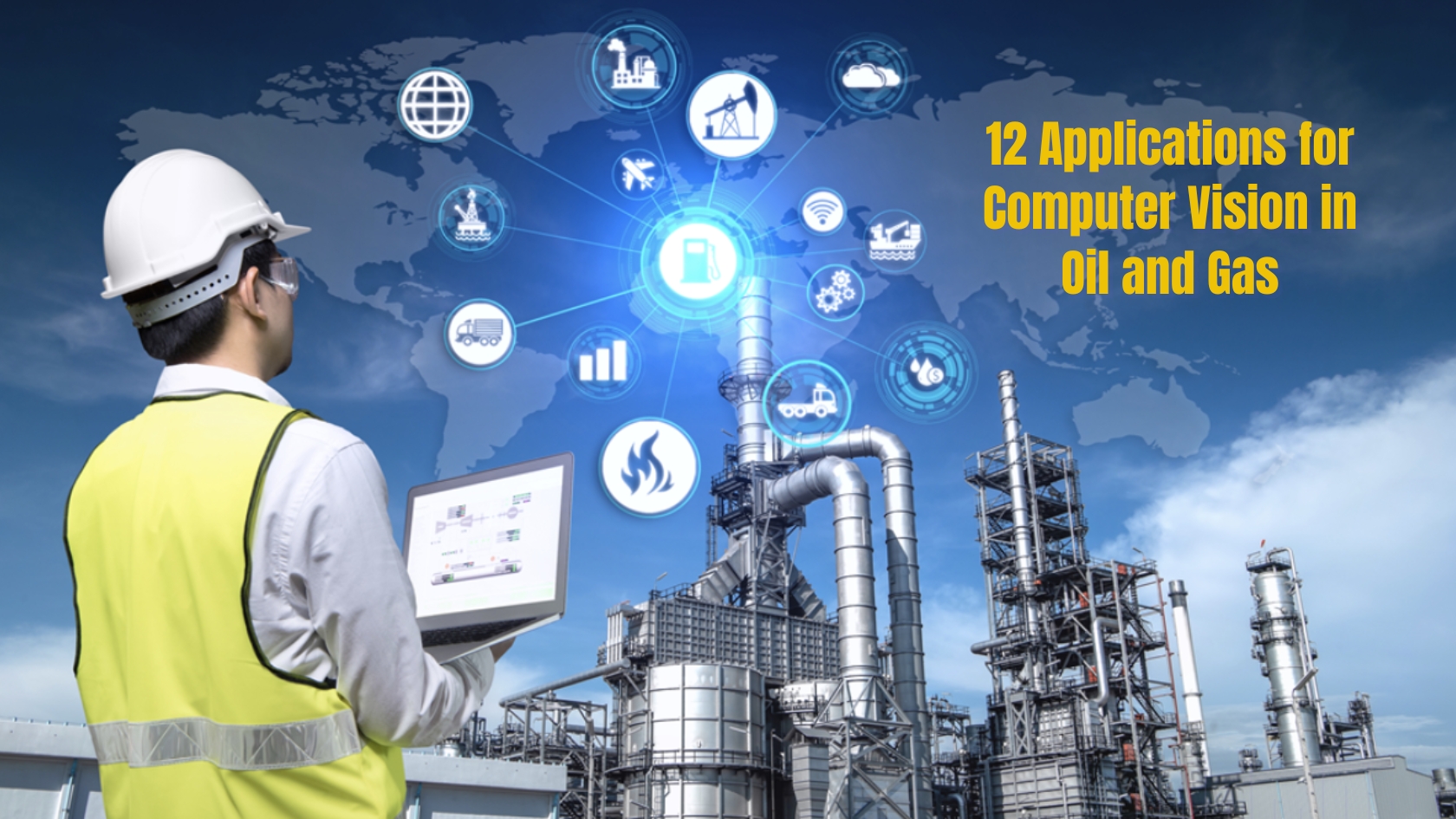
Computer Vision in Oil and Gas: 12 Incredible Use Cases for Safety and Efficiency
Table of Contents
-
Computer Vision in Oil and Gas: 12 Incredible Use Cases for Safety and Efficiency
- Introduction
- What Is Computer Vision in Oil and Gas?
- Why Computer Vision in Oil and Gas Is Gaining Importance
- Key Benefits of Computer Vision in Oil and Gas
-
12 Applications of Computer Vision in Oil and Gas
- 1. Pipeline Inspection AI
- 2. Remote Monitoring of Oil Rigs
- 3. Worker Safety Monitoring
- 4. Equipment Fault Detection
- 5. Fire and Gas Leak Detection
- 6. Drone-Based Inspection
- 7. Inventory and Asset Tracking
- 8. Environmental Monitoring
- 9. Quality Control in Operations
- 10. Automated Surveillance Systems
- 11. Predictive Maintenance
- 12. Workflow Optimization
- How Computer Vision in Oil and Gas Works
- Challenges and Limitations
- Future of Computer Vision in Oil and Gas
- Computer Vision in Oil and Gas vs Traditional Monitoring
- Conclusion
Introduction
Artificial intelligence is no longer limited to tech companies or digital products—it is now transforming some of the most complex and high-risk industries in the world. Among them, the oil and gas sector stands out as one of the biggest beneficiaries of AI-driven innovation. In particular, Computer Vision in Oil and Gas is emerging as a critical technology that is reshaping how operations are monitored, managed, and optimized.
In 2026, the industry faces increasing pressure to improve safety, reduce downtime, and operate more efficiently in remote and hazardous environments. Traditional monitoring methods are no longer sufficient to handle these challenges. This is where computer vision, powered by advanced AI models, comes into play.
By acting as “digital eyes” across oil rigs, pipelines, and refineries, computer vision systems can detect risks, monitor processes, and automate inspections in real time. The result is a safer, smarter, and more efficient energy sector that is better equipped to meet modern demands.
What Is Computer Vision in Oil and Gas?
Computer Vision in Oil and Gas refers to the use of AI-powered systems that analyze images and video feeds to monitor industrial operations, detect anomalies, and improve decision-making. These systems use cameras, sensors, and machine learning models to interpret visual data in real time.
In simple terms, computer vision acts like a highly trained observer that never gets tired. It continuously scans environments, identifies patterns, and flags potential issues before they escalate into serious problems.
Unlike traditional monitoring systems that rely heavily on manual inspection, computer vision automates the process. It can identify leaks, track equipment performance, and even monitor worker behavior without requiring constant human oversight.
A useful analogy is to think of computer vision as “digital eyes” for industrial operations. Just as a human inspector watches for problems, these systems observe and analyze everything—but with greater speed, accuracy, and consistency.

Why Computer Vision in Oil and Gas Is Gaining Importance
The oil and gas industry operates in some of the most challenging environments, from offshore rigs to remote pipelines. These conditions make monitoring and maintenance both difficult and expensive. As a result, the adoption of Energy Sector AI is accelerating rapidly.
One of the primary drivers of this shift is safety. Workers are often exposed to hazardous conditions, including extreme temperatures, toxic gases, and heavy machinery. Computer vision helps reduce these risks by automating surveillance and detecting unsafe situations in real time.
Another key factor is operational efficiency. Equipment failures can lead to significant downtime and financial losses. By identifying issues early, computer vision systems help prevent costly disruptions.
Remote operations are also a major challenge. Many oil rigs and pipelines are located in isolated areas where manual monitoring is not always feasible. Remote Monitoring Oil Rigs using AI-powered cameras allows companies to maintain visibility without being physically present.
Finally, regulatory compliance is pushing companies to adopt advanced monitoring technologies. Governments and industry bodies are enforcing stricter safety and environmental standards, making computer vision an essential tool for compliance.
Key Benefits of Computer Vision in Oil and Gas
The adoption of computer vision brings multiple advantages that directly impact safety, efficiency, and cost management in the oil and gas industry.
Improved worker safety
Reduced downtime
Real-time monitoring
Cost optimization
Predictive maintenance
Improved worker safety is one of the most significant benefits. Computer vision systems can detect whether workers are wearing protective equipment, identify unsafe behaviors, and alert supervisors instantly. This reduces the likelihood of accidents and enhances overall workplace safety.
Reduced downtime is another major advantage. By continuously monitoring equipment and processes, these systems can detect issues before they lead to failures. This allows maintenance teams to act proactively rather than reactively.
Real-time monitoring ensures that operations are always under observation. Unlike manual inspections, which are periodic, computer vision provides continuous oversight, enabling faster response to potential problems.
Cost optimization is achieved through automation and efficiency improvements. Companies can reduce the need for manual inspections, lower maintenance costs, and minimize production losses.
Predictive maintenance is perhaps the most transformative benefit. By analyzing visual data, computer vision systems can predict when equipment is likely to fail, allowing for timely repairs and preventing unexpected breakdowns.

12 Applications of Computer Vision in Oil and Gas
The applications of Computer Vision in Oil and Gas are vast and continue to expand as technology evolves. From safety monitoring to operational optimization, these systems are being deployed across various stages of the energy value chain.
1. Pipeline Inspection AI
Pipelines are critical infrastructure in the oil and gas industry, and their integrity is essential for safe operations. Pipeline Inspection AI uses computer vision to detect corrosion, cracks, and leaks in pipelines.
By analyzing images captured by cameras or drones, these systems can identify structural issues that may not be visible to the human eye. Early detection helps prevent leaks and environmental damage.
2. Remote Monitoring of Oil Rigs
Oil rigs are often located in remote and harsh environments, making manual monitoring challenging. Computer vision enables continuous surveillance of these sites through cameras and sensors.
This allows operators to monitor equipment performance, detect anomalies, and ensure safety without being physically present on-site.
3. Worker Safety Monitoring
Ensuring worker safety is a top priority in the oil and gas industry. Computer vision systems can monitor whether workers are wearing personal protective equipment (PPE) and following safety protocols.
They can also detect unsafe behaviors, such as entering restricted areas or operating machinery incorrectly, and trigger alerts in real time.
4. Equipment Fault Detection
Machinery failures can lead to costly downtime and safety risks. Computer vision systems analyze visual data to identify signs of wear and tear, overheating, or misalignment.
By detecting these issues early, companies can perform maintenance before a failure occurs.
5. Fire and Gas Leak Detection
Fire and gas leaks are among the most dangerous risks in oil and gas operations. Computer vision systems can detect flames, smoke, and gas leaks using advanced image recognition techniques.
This enables rapid response and helps prevent catastrophic incidents.
6. Drone-Based Inspection
Drones equipped with cameras and AI models are increasingly used for inspections. They can access hard-to-reach areas and capture high-resolution images for analysis.
This reduces the need for manual inspections and improves safety by minimizing human exposure to hazardous environments.
7. Inventory and Asset Tracking
Managing equipment and inventory across large facilities can be challenging. Computer vision systems can track assets in real time, ensuring that tools and materials are accounted for.
This improves operational efficiency and reduces losses.
8. Environmental Monitoring
Environmental protection is a critical concern in the oil and gas industry. Computer vision systems can detect oil spills, monitor emissions, and identify environmental hazards.
This helps companies comply with regulations and minimize their environmental impact.
9. Quality Control in Operations
Maintaining quality standards is essential for efficient operations. Computer vision systems can monitor processes and detect deviations from expected parameters.
This ensures consistent output and reduces the risk of defects.
10. Automated Surveillance Systems
Security is another important aspect of oil and gas operations. Computer vision enables automated surveillance of facilities, detecting unauthorized access and suspicious activities.
This enhances security and protects valuable assets.
11. Predictive Maintenance
Predictive maintenance uses visual data to anticipate equipment failures. By analyzing patterns and trends, computer vision systems can predict when maintenance is needed.
This reduces downtime and extends the lifespan of equipment.
12. Workflow Optimization
Computer vision can analyze operational workflows and identify inefficiencies. By providing insights into how tasks are performed, it helps optimize processes and improve productivity.

How Computer Vision in Oil and Gas Works
The workflow of computer vision systems in the oil and gas industry involves several key steps that transform raw visual data into actionable insights. The process begins with data capture, where cameras, drones, and sensors collect images and video from various parts of the operation.
Once the data is captured, it undergoes image processing. This step involves cleaning and preparing the data for analysis. The system enhances image quality, removes noise, and extracts relevant features.
Next, AI models analyze the processed data. These models are trained to पहचान patterns, detect anomalies, and identify specific objects or events. This is where the core intelligence of the system comes into play.
Finally, the system generates outputs in the form of alerts, reports, or automated actions. These outputs help operators make informed decisions and respond quickly to potential issues.
Challenges and Limitations
Despite its advantages, Computer Vision in Oil and Gas is not without challenges. One of the main issues is accuracy in harsh environments. Dust, extreme weather, and low visibility can affect the performance of computer vision systems.
High implementation costs are another barrier. Setting up cameras, sensors, and AI infrastructure requires significant investment, which can be a concern for smaller companies.
Data privacy and security are also critical considerations. Since these systems collect and analyze large amounts of data, ensuring that this data is protected is essential.
Future of Computer Vision in Oil and Gas
The future of computer vision in the oil and gas industry is closely tied to advancements in AI and automation. As technology continues to evolve, these systems are expected to become more accurate, efficient, and capable.
One of the key trends is the development of AI-powered autonomous operations. These systems can manage entire workflows with minimal human intervention, improving efficiency and reducing risks.
Integration with IoT and robotics is another important development. By combining computer vision with connected devices and robotic systems, companies can create fully automated and intelligent operations.
The concept of smart oil fields is also gaining traction. These are facilities where AI and automation are used to optimize every aspect of operations, from exploration to production.
Computer Vision in Oil and Gas vs Traditional Monitoring
Feature | Traditional Monitoring | Computer Vision |
Efficiency | Low | High |
Safety | Moderate | High |
Cost | High | Optimized |
Speed | Slow | Real-time |
Traditional monitoring relies heavily on manual inspections and periodic checks. This approach is time-consuming and prone to human error. In contrast, computer vision provides continuous, real-time monitoring that enhances both safety and efficiency.
The shift from traditional methods to AI-driven systems represents a significant transformation in how the industry operates.
Conclusion
Computer Vision in Oil and Gas is no longer a futuristic concept—it is a practical and powerful solution that is already transforming the industry. By enabling real-time monitoring, improving safety, and optimizing operations, this technology is addressing some of the most critical challenges faced by the energy sector.
As companies continue to adopt AI-driven solutions, the role of computer vision will only grow. From predictive maintenance to environmental monitoring, its applications are expanding rapidly, offering new opportunities for efficiency and innovation.
While challenges such as cost and accuracy remain, ongoing advancements in technology are expected to overcome these limitations. The future of the oil and gas industry will be defined by intelligent systems that can see, analyze, and act with precision.
Organizations that embrace Computer Vision in Oil and Gas today will be better positioned to lead in a rapidly evolving energy landscape. The shift toward smarter, safer, and more efficient operations is already underway—and computer vision is at the heart of this transformation.

Empowering India’s Entrepreneurs Through AI-Driven Education and Innovation.
Faq’s
What is Computer Vision in Oil and Gas?
It is the use of AI to analyze images and video for monitoring operations, detecting risks, and improving efficiency in the oil and gas industry.
How is AI used in oil and gas safety?
AI systems monitor worker behavior, detect hazards, and provide real-time alerts to prevent accidents.
What are the benefits of computer vision?
It improves safety, reduces downtime, enables real-time monitoring, and supports predictive maintenance.
Is computer vision expensive to implement?
Initial costs can be high, but long-term savings from efficiency and reduced downtime often justify the investment.
What is the future of AI in oil and gas?
The future includes autonomous operations, smart oil fields, and deeper integration with IoT and robotics.