Jobyaari Founder Success Stories
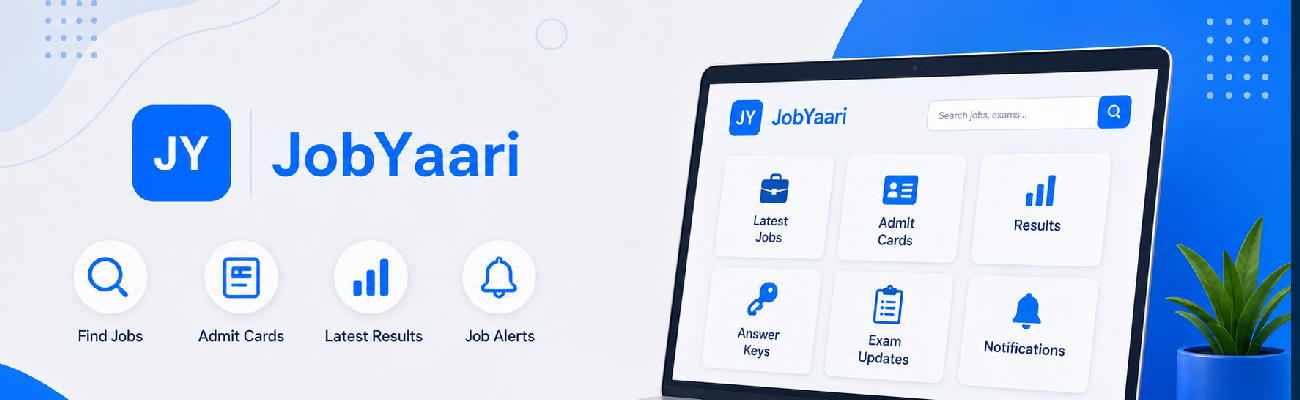
The One-Line Story
The founders of JobYaari built India's first qualification-filter-led government job discovery platform because they understood something every Sarkari Naukri aspirant knows instinctively but no existing platform had solved — that finding the right government job is not a search problem, it is a relevance problem, and the difference between the two is the difference between a platform that overwhelms and one that empowers.
The Problem That Started Everything — An Information Gap With Real Human Consequences
There is a specific kind of anxiety that every government job aspirant in India knows but rarely talks about openly.
It is not the anxiety of an exam. It is not the anxiety of competition — of knowing that 30 million people applied for the same railway post you are preparing for. It is a quieter, more corrosive anxiety. The fear of missing something.
A notification published on a Tuesday afternoon with a Friday deadline. An admit card released without warning, available for download for 72 hours before the link expires. A result was declared at 11pm on a government website that crashes under the traffic. A recruitment cycle that opens and closes while you are sitting in a coaching class, your phone on silent, unaware that the application window for the job you have been preparing for since Class 12 has just passed.
This is not a hypothetical scenario. For millions of Indian government job aspirants — particularly those in smaller cities, rural areas, and households without reliable internet access or a network of informed peers — this scenario is an annual reality. Good candidates, genuinely qualified, sincerely prepared, lose opportunities not because they failed their exam but because nobody told them the exam was happening on time.
This is the problem JobYaari was built to solve. Not partially. Completely. For every aspirant. In every state. At every qualification level. Every single day.
The Market Nobody Was Serving Well — 450 Million Aspirants, Mostly Underserved
To understand why JobYaari matters, you need to understand the scale of the market it serves — and how chronically underserved that market has been despite its enormous size.
India has approximately 450 million people actively seeking, preparing for, or considering government employment. The reasons are deeply embedded in Indian social and economic culture — the security of a confirmed government position, the social status it confers in families across Haryana, Uttar Pradesh, Bihar, Rajasthan, and beyond, the pension and benefits structure that no private sector equivalent can match, and the transparent, seniority-based career progression that removes the politics of private sector advancement.
Every year, millions of students emerge from Class 10 and Class 12 examinations with their eyes on a government career. Millions more graduate from colleges with degrees in engineering, science, arts, commerce, and medicine — and immediately begin preparing for UPSC, SSC, state PSC, banking, and railway examinations. Millions of others are mid-preparation aspirants — three, four, five years into their Sarkari Naukri journey — tracking dozens of examinations simultaneously, studying for multiple posts, and navigating a notification landscape of bewildering complexity.
Serving this market well requires five things: accurate information sourced from official channels only, speed of publication that ensures aspirants see notifications before deadlines close, smart organisation that shows each candidate only what is relevant to them, mobile accessibility that works in rural areas on basic smartphones, and a notification system that reaches aspirants directly rather than waiting for them to remember to check.
The established players in this market — some operating for 12 to 15 years — had built large platforms with large content libraries. But they had built them for the internet of 2009 to 2012 — without the filtering sophistication, the mobile-first design, and the WhatsApp-first distribution that the 2025 aspirant needs and expects. Their interfaces were cluttered, their navigation was complex, and their notification systems were email-based in a country where WhatsApp is the dominant communication platform for the demographic they serve.
The gap between what aspirants needed and what existing platforms offered was the opportunity. JobYaari was built to close it.
The Founding Insight — Relevance Is Not a Filter. It Is the Product.
Most government job portals present notifications in the same format: a chronological feed of every recruitment notification published, across every state, every sector, every qualification level — simultaneously. A student who completed Class 10 sees the same homepage as a PhD holder. A railway aspirant sees the same feed as a banking aspirant. An aspirant in Kerala sees jobs posted for Uttar Pradesh that are irrelevant to their geographic preference.
This is not a user experience problem. It is a fundamental misunderstanding of what an aspirant needs from a government job platform.
An aspirant does not want to see all government jobs. They want to see the government jobs they can apply for. The jobs they are eligible for. The jobs that match their qualification, their preferred sector, their geographic preference, and their timeline.
The difference between "all government jobs" and "government jobs relevant to me" is the difference between information overload and actionable intelligence. It is the difference between a platform that exhausts the user and one that empowers them.
JobYaari was built around this insight. The entire architecture of the platform — every navigation decision, every filter, every category structure — was designed to answer one question before any other: is this job relevant to this specific aspirant?
This is why JobYaari describes itself as "India's 1st Job searching portal with lots of filter." Not because filter count is a vanity metric. But because each filter represents a dimension of relevance that every aspirant navigates in their head every time they look at a notification — and JobYaari built those filters directly into the platform architecture rather than leaving the aspirant to do the mental work themselves.
The Platform Architecture — Built Around How Aspirants Actually Think
The most instructive way to understand JobYaari's design philosophy is to follow the path of a real aspirant using it.
Rajesh is 22 years old. He lives in a small town in Haryana. He completed his BSc in Science from a local government college last year and is now preparing for government competitive examinations. He wants a central government job — specifically in SSC, Railways, or a scientific department that values his science background.
On most government job portals, Rajesh lands on a homepage showing 80 to 150 recent notifications. He has to manually scan each one to determine: Is my qualification eligible? Is this in a department I want? Is the application window still open? Is this central or state? Is this for a position that matches my career aspiration?
This scanning process takes 20 to 40 minutes. He misses notifications because the titles are not specific enough to catch his attention. He opens several that are irrelevant. His experience is frustrating rather than empowering.
On JobYaari, Rajesh's experience is different from the moment he arrives.
He navigates to the Graduate section. He selects Science. He is now looking at a filtered feed of government job notifications that are specifically relevant to science graduates. He then applies the sector filter — selecting SSC/State PCS and Railway — narrowing further to the specific sectors he is targeting. He applies the state filter to see central government positions that are open nationally.
In less than two minutes, Rajesh has moved from 150 notifications to the 8 to 12 that are genuinely relevant to him right now. He reads each one carefully. He notes the application deadlines. He follows JobYaari's WhatsApp channel to receive instant notification the next time a relevant post is published.
His experience is not just better. It is categorically different. The platform has not just given him information — it has given him clarity.
This is what JobYaari built. And it is why 50,000 aspirants trust it.
The Qualification Architecture — Why This Is the Right Primary Filter
JobYaari's decision to make qualification level the primary navigation axis of the platform is the most important single design decision in the platform's architecture — and it reflects a genuine understanding of how aspirants think about their job search.
In India's government job market, qualification is not just a filter. It is the first question every aspirant asks about every notification. "Am I eligible?" is always question one. Everything else comes after.
The qualification architecture JobYaari built covers the complete spectrum of Indian educational credentials:
Pre-Graduate (10th, 12th, ITI, Polytechnic) — For the millions of aspirants who completed their education at the secondary level and are eligible for Group D positions, constable posts, peon roles, technical apprenticeships, and similar entry-level government positions. This is one of the largest aspirant segments in India — working-class families whose children completed Class 10 or 12 and are immediately seeking employment rather than continuing education.
Graduate — Seven Streams — Any Graduate, Engineering, Science, Arts, Commerce, Medical, Education. The seven streams reflect the diversity of India's graduate workforce and ensure that a BSc Agriculture graduate, a BEd teacher, a BCom accountancy student, and a BTech engineer can each find the navigation path that shows them only their eligible opportunities.
Post-Graduate — Seven Streams — The same stream architecture applied at postgraduate level, serving the growing population of aspirants with master's degrees, MPhil, and doctorates who are targeting scientific officer posts, university teacher positions, research roles, and specialist government positions.
This 18-category qualification architecture is not designed for comprehensiveness as a feature. It is designed because each category represents a distinct aspirant population with distinct notification sets, distinct eligibility criteria, and distinct career trajectories. The platform serves all of them — simultaneously, specifically, and without requiring any of them to wade through irrelevant content to find their relevant opportunities.
The Job Type Architecture — Sector-Specific Discovery
Beyond qualification, JobYaari organises notifications by employment sector — the second most important filter for aspirants who have a clear sector preference:
SSC / State PCS — Staff Selection Commission examinations and State Public Service Commission notifications. The most prestigious non-UPSC central government positions — CGL, CHSL, MTS, CPO, and the vast range of state civil services positions. This is the most-contested category in Indian government employment and generates the highest aspirant engagement of any sector.
Railway — Indian Railways is the world's fourth-largest railway network and one of India's three largest employers. Railway recruitment — RRB NTPC, RRB Group D, RRB ALP, SECR, RPF — generates some of the highest application volumes of any single employer in human history. An aspirant targeting Railway positions has specific preparation needs, specific exam patterns, and specific notification timelines that a sector-filtered view serves directly.
Teaching — Central and state government teaching recruitment — CTET, TET, TGT, PGT, primary teacher recruitment, university lecturer positions, Navodaya Vidyalaya, Kendriya Vidyalaya, and the vast state education department recruitment cycles. Teaching is one of India's largest government employment sectors and serves an aspirant population with specific educational qualifications (BEd, DEd, subject specialisation) that qualification + sector filtering identifies precisely.
Police / Army — Constable, sub-inspector, soldier, havildar, and officer recruitment across central armed police forces (CRPF, CISF, BSF, ITBP, SSB), state police organisations, and the Indian Army, Navy, and Air Force. Physical fitness requirements, age limits, and the specific nature of armed forces recruitment make this a sector where aspirants benefit significantly from focused, sector-specific notification tracking.
Banking — IBPS PO, IBPS Clerk, IBPS SO, SBI PO, SBI Clerk, SBI SO, RRB Officer, RRB Assistant, NABARD, RBI — the banking sector generates some of the most competed-for government positions in India, particularly among commerce, mathematics, and any-graduate aspirants. Banking exam cycles are annual, predictable, and require specific preparation — aspirants tracking this sector need timely notification of recruitment announcements to begin preparation with adequate lead time.
Nursing — Government hospital and healthcare department nursing recruitment — one of the fastest-growing government job categories as India expands its public health infrastructure. AIIMS, ESIC, central government hospitals, and state health departments generate consistent nursing recruitment cycles that a growing population of BSc Nursing and GNM graduates actively tracks.
The Daily Publication Engine — What 50,000 Aspirants Depend On
The most operationally demanding dimension of running a government job platform is not the technology. It is the content — the daily work of monitoring every official government recruitment source, verifying every notification, publishing complete and accurate details, and distributing updates to 50,000+ aspirants before application windows close.
JobYaari's content operation monitors notifications from:
Central Government Bodies — UPSC, SSC, IBPS, SBI, RBI, Indian Railways (all zones and RRBs), DRDO, ISRO, AIIMS, ESIC, EPFO, NHM, and every central ministry's departmental recruitment.
State Government Bodies — State PSCs across all 28 states, state SSCs, state police recruitment boards, state health departments, state education departments, and state public sector undertakings.
Defence and Paramilitary — Army, Navy, Air Force, CRPF, CISF, BSF, ITBP, SSB, Coast Guard, NCC, and affiliated institutions.
Banking and Financial — IBPS, SBI, RBI, NABARD, SIDBI, NHB, and all regional rural banks.
Academic and Research — UGC, CSIR, ICAR, ICMR, university recruitments, and national laboratory positions.
Each notification goes through a verification step before publication — confirming the source is official, the details are accurate, the deadlines are correct, and the eligibility criteria are complete. This commitment to source verification is the single most important quality differentiator in the Sarkari Naukri information market — where inaccurate notifications from unverified sources have caused real aspirants to miss real opportunities or waste time on invalid applications.
The blog content that accompanies each major recruitment notification adds a layer of accessible explanation that official government notifications rarely provide. Where an official notification might say "CEN-01/2026" in a PDF requiring three additional clicks to open, JobYaari's blog post says "UPSSSC Forest Guard Recruitment 2026 — 708 Posts, PET 2025 Required, Age Limit 18-40, Last Date June 15" — and provides a complete, readable breakdown of everything an aspirant needs to know to decide whether to apply and how to proceed.
The WhatsApp Channel — Why This Is the Most Important Feature JobYaari Built
Among all the features JobYaari offers — smart filters, qualification navigation, admit card tracking, result updates, comprehensive blog coverage — the WhatsApp Channel at whatsapp.com/channel/0029Vb6ewxeBqbrEjLgEyJ1S is the most strategically important single element of the platform.
The reason is distribution economics.
A website is a pull medium. Users must actively remember to visit it, type the URL or search, and navigate to find the information they need. This works for aspirants who check daily, who have the platform bookmarked, and who have established a habit of visiting.
But a significant proportion of India's government job aspirants — particularly in Tier-3 cities, rural areas, and households without reliable desktop internet — do not have this kind of web-browsing habit. They communicate primarily through WhatsApp. They receive information primarily through WhatsApp. They share information with peers primarily through WhatsApp.
For these aspirants — who are arguably the ones with the most to gain from timely, accurate government job information — a website-only platform is structurally inaccessible. Not because of technology. Because of behaviour.
WhatsApp channels push information directly to the subscriber's device. No visit required. No search required. No habit to establish. The notification arrives in the same interface the aspirant uses to communicate with their family, their study group, their coaching institute peers. It arrives with the same alert tone as a message from their mother.
This is not a marginal improvement in information delivery. For an aspirant in a village in Bihar who checks WhatsApp twenty times a day and visits websites twice a week, it is the difference between knowing about a recruitment notification and missing it entirely.
JobYaari's WhatsApp Channel commitment — "Fast Updates, No Spam" — reflects a deep understanding of what destroys notification channels: sending too much, too frequently, of insufficient relevance. A channel that floods users with notifications they don't care about trains them to ignore it. JobYaari's discipline about what gets pushed — only genuinely significant, time-sensitive, high-relevance notifications — maintains the signal quality that keeps 50,000 aspirants subscribed and reading.
The Mobile-First Architecture — Built for India's Real Internet
India's internet is primarily a mobile internet. Over 70% of India's web traffic comes from smartphones. In Tier-3 cities, smaller towns, and rural areas — where many of JobYaari's most important users live — the smartphone is not just the primary internet device. It is often the only one.
JobYaari's platform was built mobile-first — not desktop-first with mobile adaptation. This distinction matters in practice: a mobile-first platform is designed from the smallest screen outward, ensuring that every element of the user experience works perfectly on a basic Android smartphone on a 4G connection before any desktop enhancement is considered.
The specific mobile experience design decisions that matter for aspirants:
Fast loading on mobile data — A page that takes six seconds to load on a desktop-equivalent broadband connection may take fifteen to twenty seconds on a mid-range smartphone on 4G in a congested network area. JobYaari's performance optimisation ensures pages load quickly on real mobile connections — not just on office fibre.
Touch-optimised navigation — Filter buttons, category navigation, and content cards are sized and spaced for finger navigation, not mouse precision. An aspirant tapping through job categories on a 5.5-inch screen should be able to navigate without zooming or accidentally hitting the wrong element.
Readable content without horizontal scrolling — Every piece of content — job titles, eligibility criteria, deadline information, blog post text — fits within a standard mobile viewport without requiring the user to scroll horizontally or zoom.
Android App — Coming Soon — The footer of JobYaari's website shows Google Play and App Store badges marked "Launching Soon." This signals that the team is investing in a native mobile application that will provide the full platform experience — notifications, job tracking, admit card downloads — in a dedicated app environment. When launched, this app will further close the gap between what aspirants need and what the platform delivers.
The Blog — Not Content Marketing. A Career Resource.
JobYaari's blog is the most practically useful content on the platform — and it is worth examining in detail because it represents a content philosophy that separates genuinely aspirant-focused platforms from platforms that produce content to rank on Google without caring whether it helps the reader.
Every blog post on JobYaari is an actionable notification breakdown. Not a general article about "how to prepare for SSC CGL." Not a clickbait piece about "top 10 government jobs after 12th." Specific, time-sensitive, practical information that a specific aspirant can read and immediately know whether this recruitment is relevant to them and what steps to take next.
Recent examples demonstrate the standard:
CSC Aadhaar Supervisor Recruitment 2026 — Apply Online for 125 Posts — Complete notification breakdown: post name, total vacancies, eligibility criteria, age limit, educational qualification, application process, last date, and direct application link. An aspirant reading this post knows within 90 seconds whether to apply and how.
RRB Isolated Categories Exam Date 2026 Released — Exam scheduled for 14 and 15 July 2026. CBT details, complete exam schedule, candidate instructions. An aspirant who applied for this recruitment knows exactly when to prepare for, download their admit card, and appear for the exam.
UPSSSC Forest Guard Recruitment 2026 — 708 Posts — PET 2025 requirement explained, age limit 18 to 40, selection process broken down, application link provided. Every element that an aspirant needs to make an informed application decision is present.
ABVMU CAHET Result 2026 Out — Direct scorecard download link, merit list access, qualifying status information, counselling schedule. An aspirant waiting for this result can find it on JobYaari before they find it on the official website.
Each of these posts serves a different aspirant population at a different stage of their government career journey — applying, preparing, checking results. The cumulative effect of consistent, accurate, timely blog coverage across every major recruitment notification is a content library that generates organic search traffic from every recruitment-specific query that Indian aspirants enter into Google — thousands of individually ranking pages, each serving a specific aspirant need at the exact moment that aspirant most needs the information.
The Reviews — What Real Aspirants Actually Say
The four testimonials visible on JobYaari's about page are brief, but each one contains a specific truth about the platform's value:
Pratham (4.5/5): "Very helpful platform for government job aspirants. Timely updates."
The word "timely" is the key word here. In a market where the difference between knowing about a notification on Tuesday and finding out on Saturday is the difference between applying and missing the window entirely, timely is not a compliment about general responsiveness. It is a specific acknowledgment that JobYaari delivered information when it mattered.
Karan (4.5/5): "Simple UI and reliable job alerts. Highly recommended."
"Simple UI" from a user is high praise because it reflects the invisibility of good design. When design works, users don't think about it — they just navigate naturally and find what they need. When design fails, users notice the friction. Karan's praise of simplicity reflects a platform that got out of its own way.
Ritika (5/5): "Saves a lot of time. Everything is available at one place."
"Saves a lot of time" is the most commercially significant review of the four. It measures the platform's value against the most finite resource its users have — the time available in each day for job search and preparation. For an aspirant who was spending 45 minutes per day checking multiple official websites, JobYaari converting that to 10 minutes of organised, filtered, single-destination browsing is a genuine daily quality-of-life improvement.
Shivam (5/5): "Reliable job alerts and simple UI. Highly recommended."
"Reliable" appears again, paired with "simple" again. Two independent users chose the same words to describe the same qualities. This is not coincidence — it is signal. The platform delivers on the two promises that matter most to aspirants: information when it needs to arrive, and a design that does not create obstacles to receiving it.
The Equity Mission — Why "For Everyone" Is the Hardest Thing to Build
JobYaari's mission statement identifies "equal career opportunities" as a core commitment — "bridging the information gap and giving aspirants from all backgrounds equal access to government job opportunities across India."
This is easy to write. It is genuinely difficult to execute.
Building a platform that serves an aspirant in Delhi with fast broadband and a high-end smartphone is straightforward. Building a platform that serves equally well an aspirant in a rural area of Jharkhand with a mid-range Android phone on 2G or 3G connectivity — that aspirant matters as much, has as much riding on their government career aspirations, and is currently more likely to miss opportunities due to the information gap than their urban counterpart — requires deliberate, specific design and operational choices.
The WhatsApp channel is an equity tool. It reaches aspirants who do not visit websites regularly.
The mobile-first design is an equity tool. It works on lower-end devices with slower connections.
The qualification-based filtering is an equity tool. It means an aspirant who only completed Class 10 — who might feel intimidated by a homepage dominated by engineering and IAS notifications — sees immediately that their qualification opens a specific set of opportunities that are genuinely relevant to them.
The free access model is an equity tool. There is no paywall, no premium subscription, no freemium content lock. Every notification, every admit card update, every result, every blog post is accessible to every aspirant regardless of their economic situation. The aspirant from a poor family in a rural district who cannot afford a coaching institute subscription can access exactly the same information as an aspirant from a middle-class family in a Tier-1 city.
This commitment to free, universal access is a commercial decision as much as a social one — the scale of the free user base is what makes the platform's advertising economics viable. But the commitment is genuine: JobYaari was built for the aspirant who has the least, not for the aspirant who already has the most. The aspirant with the least is the one who needs a platform like this most urgently.
The Partnership Opportunity — How JobYaari Grows With Collaborators
JobYaari's contact page reveals a structured partnership program — an invitation to coaching institutes, educational platforms, digital agencies, technology companies, and content creators to build with the platform rather than just use it.
The partnership categories reflect the ecosystem JobYaari is building:
Business Partnership — For organisations that want to reach JobYaari's 50,000+ aspirant audience for genuinely relevant products and services — coaching materials, test series, educational technology, banking and financial products.
Marketing Partnership — For organisations with complementary audiences where mutual promotion creates value — educational YouTube channels, preparation communities, student-focused media platforms.
Technology Partner — For technology companies that build tools aspirants use — EdTech platforms, digital learning tools, productivity applications for students.
Affiliation — For coaching institutes, educators, and career guidance providers who want a systematic referral relationship with a trusted aspirant-facing platform.
Sponsorship — For brands wanting visibility within the highly engaged JobYaari aspirant community.
This partnership architecture reflects a strategic understanding that JobYaari's most valuable asset — 50,000 highly engaged, actively job-seeking aspirants across India — is an audience that many organisations want to reach and are currently reaching inefficiently. By building a formal partnership program, JobYaari creates structured, value-aligned relationships that generate revenue while maintaining the platform's commitment to aspirant trust.
The Coming App — What the Next Phase Looks Like
The "Launching Soon" Android and iOS app badges visible on every JobYaari page signal the next phase of the platform's development — and the most significant near-term capability expansion since launch.
A native mobile app changes the platform's relationship with aspirants in three specific ways:
Push notifications — Native app push notifications arrive on the lock screen, with sound, regardless of whether the user has WhatsApp open or is actively browsing. For time-sensitive notifications — admit card releases with 48-hour download windows, result declarations, application deadline reminders — push notifications from a native app are more reliable and more visible than any other delivery mechanism.
Offline access — A native app can cache critical content for offline viewing — allowing aspirants in areas with intermittent connectivity to access recently loaded job notifications, saved bookmarks, and downloaded admit cards without requiring an active internet connection.
Personalised experience — A logged-in app user can save their qualification profile, preferred states, preferred job sectors, and target examination list — enabling the platform to deliver a genuinely personalised experience that shows only the notifications most relevant to that specific aspirant, without requiring them to re-apply filters on every visit.
When launched, the JobYaari app will represent the completion of a distribution strategy that already covers web, WhatsApp, Instagram, Facebook, LinkedIn, and YouTube — adding the most direct, most persistent, and most personalised channel available.
What the Team That Built JobYaari Wants Every Aspirant to Know
The mission statement of JobYaari is not corporate language. It is a genuine operational commitment made by a team that understands what is at stake in the government job market they serve.
Every government job aspirant in India is not just looking for employment. They are looking for security — the security to plan a life, support a family, buy a home, and face an uncertain future from a position of stability rather than vulnerability. The aspiration of a government job in India carries the weight of family sacrifices, years of preparation, and a specific vision of what a good life looks like.
When that aspiration is defeated by something as mundane and fixable as a missed notification — a recruit cycle that opened and closed while the aspirant was uninformed — it is not just a personal disappointment. It is a systemic failure. A failure of the information infrastructure that should exist between the institution that is hiring and the individual who is qualified and ready to serve.
JobYaari was built because that failure was preventable. Because the technology to prevent it existed. Because the only thing missing was a team willing to build the right platform, maintain it with the right discipline, and deliver it free of charge to every aspirant who needed it.
That is what the team built. That is what 50,000 aspirants trust every day. And that number is growing.
The Five Lessons Every Indian GovTech / EdTech Founder Should Take From JobYaari
Lesson 01 — In information markets, relevance beats volume every time.
A platform that shows 10 relevant jobs is more valuable than one that shows 1,000 irrelevant ones. The instinct to maximise content volume — more notifications, more states, more categories, more posts — is exactly wrong in a market where users are already suffering from information overload. Build for signal quality, not signal quantity.
Lesson 02 — WhatsApp is India's most powerful distribution infrastructure for anything time-sensitive.
For any platform serving India's tier-2 and tier-3 markets with time-sensitive information, WhatsApp is not an optional channel. It is the primary channel. Building a great website and ignoring WhatsApp distribution is the digital equivalent of opening a great restaurant in a location where nobody walks. The audience is on WhatsApp. Go there.
Lesson 03 — Free access to information is both the right thing to do and a growth strategy.
JobYaari's free model is not charity. It is the fastest path to the scale that makes the platform commercially viable. The aspirant in rural Jharkhand who cannot afford a coaching subscription can trust and use and share JobYaari — and that trust compounds through word-of-mouth in aspirant communities where every helpful resource gets shared instantly and widely.
Lesson 04 — The most underserved audience is almost never the most obvious one.
India's startup ecosystem builds for urban, educated, digitally sophisticated early adopters. The most underserved aspirants in the Sarkari Naukri market are not in Delhi or Pune. They are in the districts of Bihar, Rajasthan, Uttar Pradesh, Jharkhand, and Odisha — where information reaches late, where coaching infrastructure is thin, and where a missed notification has more severe consequences than anywhere else. Building for the hardest-to-serve audience is both the highest-impact thing to do and the least competitive space to be in.
Lesson 05 — Daily consistency in content is the only sustainable SEO strategy.
A platform that publishes accurate, complete, timely coverage of every government job notification builds a content library of thousands of individually ranking pages — each one capturing search traffic from an aspirant looking for that specific notification, that specific admit card, that specific result. This is not a strategy that produces quick results. It is a strategy that produces compounding results — more pages, more traffic, more trust — with every passing month. The discipline to publish accurately, daily, without exception, is the most valuable operational capability a government job platform can develop.
How to Connect With JobYaari
For aspirants — join the platform:
Visit jobyaari.com and browse the qualification or sector category that matches your profile.
Join the WhatsApp channel at whatsapp.com/channel/0029Vb6ewxeBqbrEjLgEyJ1S for daily alerts.
Follow on Instagram at instagram.com/jobyaari for visual updates and motivation.
Subscribe on YouTube at youtube.com/@jobyaari for exam guidance and notification breakdowns.
Like on Facebook at facebook.com/people/Jobyaari/61581393329005 for community updates.
Follow on LinkedIn at linkedin.com/company/jobyaari for professional announcements.
For partnership enquiries:
Visit jobyaari.com/contact-us and select "Partnership" from the contact type dropdown.
Partnerships available: Business Partnership · Marketing Partnership · Technology Partner · Affiliation · Sponsorship
For careers — join the team:
Visit jobyaari.com/career
Open roles accept applications via the career form — submit CV, mobile number, email, and portfolio link.
JobYaari offers creative freedom, remote work flexibility, and high-growth energy.
The One Thing That Defines JobYaari
India has tens of millions of government job aspirants who are genuinely qualified, genuinely prepared, and genuinely committed to their government career aspiration. They study for years. They sacrifice social life, leisure, and sometimes income. They carry the weight of their family's expectations alongside their own ambition.
They deserve a platform that treats their aspiration with the seriousness it deserves. That delivers information when it is needed, not after the window closes. That organises the complexity of the government recruitment landscape into something navigable rather than overwhelming. That asks nothing from them in return — no subscription fee, no paywall, no data trade — in exchange for the information that could change the direction of their career.
That is what JobYaari is. That is what it was built for. And as long as there are aspirants in India who need accurate, timely, relevant government job information to reach the career they are working toward — JobYaari will be there, every day, making sure they get it.
"Your Government Career Starts Here."
— JobYaari
THE PLATFORM SHOWCASE
(What JobYaari Offers — For Quick Scanning)
Government Job Notifications
Verified, daily-updated recruitment notifications from central and state governments across all sectors and qualification levels — published as soon as official notifications are released.
Qualification-Based Job Discovery
Smart navigation organised by education level — 10th, 12th, ITI, Polytechnic, Graduate (7 streams), Post-Graduate (7 streams) — showing each aspirant only the jobs they are eligible for.
Sector-Specific Browsing
Jobs organised by employment sector — SSC/State PCS, Railway, Teaching, Police/Army, Banking, Nursing — for aspirants with clear sector preferences.
State-Wise Job Listings
Complete coverage of all 28 Indian states and 8 union territories — from Andaman & Nicobar to West Bengal, from Ladakh to Lakshadweep.
Admit Card Tracking
Real-time admit card release notifications with direct links to official download portals — ensuring aspirants never miss a hall ticket window.
Result Updates
Instant result declaration notifications with direct links to official result pages — reducing the anxious wait for results across multiple official websites.
Blog — Detailed Notification Breakdowns
In-depth blog posts covering major recruitment notifications — eligibility, process, timeline, and direct application links — making complex official notifications accessible and actionable.
WhatsApp Channel
50,000+ subscriber channel delivering fast, no-spam daily alerts with PDF notifications directly to subscribers' phones.
Mobile-Responsive Platform
Fully optimised for any device — works perfectly on basic Android smartphones on 4G or 3G connections.
Free Forever
No subscription fee, no premium tier, no paywall. Every feature is free for every aspirant, always.
Coming Soon — Android & iOS App
Native mobile app for push notifications, offline access, and personalised job tracking — in development.