Categories
Recent Posts





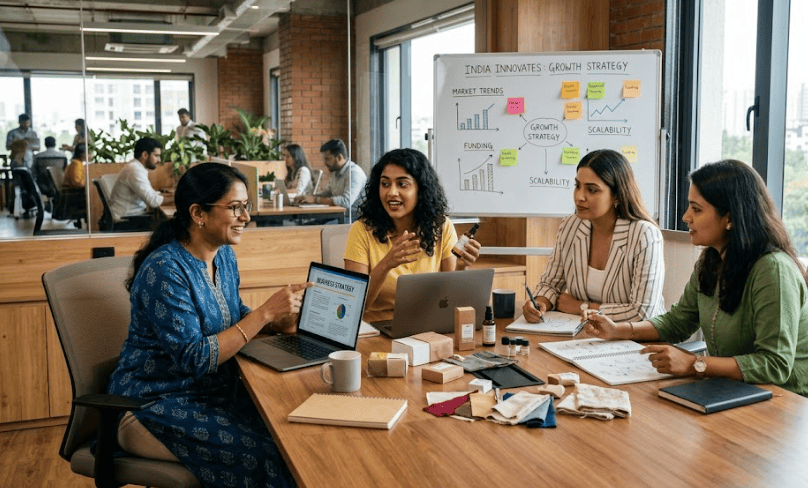
Table of Contents
Women Entrepreneurs in India: A New Era of Business
Introduction
Entrepreneurship in India is no longer defined by a single narrative. Over the past decade, the country's startup ecosystem has expanded beyond metropolitan cities and technology hubs, creating opportunities for founders from diverse backgrounds. Among the most significant changes has been the steady rise of women entrepreneurs, who are launching businesses across industries ranging from technology and manufacturing to healthcare, education, fashion, agriculture, and digital services.
Improved access to education, affordable internet, digital payment systems, government-backed initiatives, and changing social attitudes have all contributed to this shift. More women are choosing entrepreneurship not only as a career path but also as a means of creating employment, solving local problems, and achieving financial independence.
While progress has been encouraging, the journey remains far from complete. Access to funding, mentorship, and professional networks continues to be uneven, particularly for first-generation entrepreneurs. Yet the growing number of successful women-led businesses demonstrates that these barriers are increasingly being challenged.
Women Entrepreneurs Are Redefining India's Business Landscape
The image of the Indian entrepreneur has evolved considerably. Women are no longer confined to traditional sectors or small-scale enterprises. Today, they are building software companies, direct-to-consumer brands, manufacturing businesses, fintech platforms, agritech startups, wellness brands, and sustainable enterprises that serve both domestic and international markets.
This transformation is reflected in official data. According to the Press Information Bureau, nearly half of all recognised startups in India now have at least one woman director, highlighting the increasing role women play in the country's innovation ecosystem.
The significance of this trend extends beyond startup registrations. Women-led enterprises contribute to employment generation, encourage greater workforce participation, and bring diverse perspectives to business leadership, an important factor in building resilient and inclusive economies.
The Legacy of Women-Led Businesses in India
Although the current startup boom has created new opportunities, women have been building successful businesses in India for decades.
One of the earliest and most inspiring examples is Lijjat Papad, which began in 1959 when seven women in Mumbai pooled together just ₹80 to start a small papad-making venture. Over the years, the cooperative grew into one of India's most recognised household brands, employing thousands of women while maintaining its cooperative business model.
Its journey remains a powerful reminder that successful businesses are built through consistency, quality, and collaboration, not merely access to large amounts of capital.
Readers interested in the remarkable evolution of this cooperative can explore Digital Startup India's detailed feature:
From ₹80 To A Household Name: Lijjat Papad Success Story
The success of Lijjat Papad continues to inspire entrepreneurs today, particularly those starting with limited resources but ambitious goals.
Digital India Has Lowered the Barriers to Entrepreneurship
Technology has fundamentally changed how businesses are launched and scaled.
A decade ago, starting a company often required significant capital investment in office space, infrastructure, and distribution networks. Today, affordable digital tools allow entrepreneurs to manage sales, payments, marketing, customer support, and logistics from almost anywhere.
Social commerce platforms, online marketplaces, cloud software, and digital payment systems have made entrepreneurship significantly more accessible, especially for women balancing family responsibilities or operating from smaller cities.
Businesses that once required substantial investment can now begin with relatively modest capital. Cloud kitchens, online boutiques, digital marketing agencies, freelance consulting, online education platforms, handcrafted product businesses, and content creation ventures have all emerged as viable opportunities.
For aspiring entrepreneurs exploring affordable startup options, Digital Startup India's guide on 20 Profitable Business Ideas In India For 2026 offers practical business models suited to different investment levels.
The accessibility of these business models has enabled many first-time women entrepreneurs to test ideas, build customer bases, and scale operations without requiring substantial upfront investment.
Government Initiatives Supporting Women Entrepreneurs
Recognising the growing contribution of women-owned businesses, the Government of India has introduced several initiatives aimed at improving access to mentorship, finance, skill development, and market opportunities.
One of the most comprehensive initiatives is the Women Entrepreneurship Platform (WEP), developed by NITI Aayog. Rather than functioning solely as an information portal, the platform brings together entrepreneurs, investors, incubators, financial institutions, mentors, and government agencies within a single ecosystem.
Whether someone is refining a business idea, looking for funding opportunities, or seeking experienced mentors, the platform offers resources designed to support entrepreneurs at different stages of their journey.
Complementing this initiative is the Startup India Women Entrepreneurship Hub, which provides specialised support through mentoring programmes, startup recognition, capacity-building initiatives, networking opportunities, and information on government schemes designed specifically for women founders.
For entrepreneurs navigating India's startup ecosystem for the first time, these programmes help simplify access to institutional support while encouraging greater participation in innovation-driven businesses.
Startup India Women Entrepreneurship Hub
https://www.startupindia.gov.in/content/sih/en/women_entrepreneurs.html

Access to Finance Is Gradually Improving
Funding has traditionally been one of the biggest challenges faced by women entrepreneurs in India.
Although private investment in women-led startups has grown over the years, access to institutional finance remains an important factor influencing business growth, particularly for first-generation entrepreneurs and small business owners.
To address this gap, the Government of India has introduced several financing initiatives tailored to new enterprises.
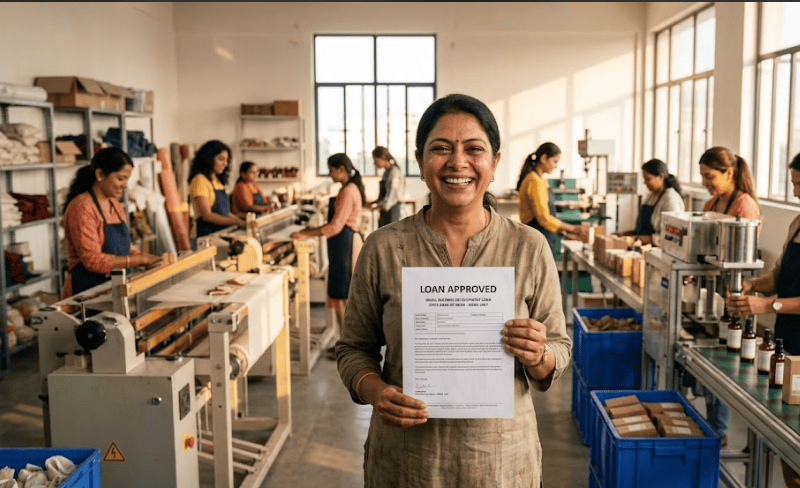
Among the most significant is the Stand-Up India Scheme, which supports eligible entrepreneurs establishing greenfield enterprises in manufacturing, services, and trading. Through participating banks, women entrepreneurs can access loans ranging from ₹10 lakh to ₹1 crore, helping them build businesses that might otherwise struggle to secure conventional financing.
The official Mudra success stories provide numerous examples of women who have expanded their businesses through institutional credit, demonstrating how access to finance can translate into long-term economic independence.
Women-Led Businesses Are Creating Jobs and Driving Inclusive Growth
The impact of women entrepreneurs extends far beyond individual business success. As more women establish and expand enterprises, they create employment opportunities, strengthen local economies, and encourage greater participation of women in the workforce.
This ripple effect is particularly important in a country where increasing female labour force participation remains an economic priority. Women-led businesses often foster inclusive workplaces, flexible employment models, and community-based enterprises that empower other women to achieve financial independence.
Recent data reinforces this trend. A Forbes India analysis of government data reported that around 72% of women-led unincorporated businesses employ other women, highlighting their role as significant employment generators rather than solely business owners.
This multiplier effect demonstrates why supporting women entrepreneurs is not just about promoting gender equality. It is also about fostering economic growth, encouraging innovation, and building stronger communities.
Challenges That Continue to Hold Women Entrepreneurs Back
Despite encouraging progress, several structural barriers continue to affect the growth of women-owned businesses in India.
One of the most significant challenges remains access to capital. Although government schemes and financial institutions have expanded lending opportunities, women-led startups still receive a relatively small share of venture capital investment compared to their male counterparts.
Professional networking is another area where many first-generation founders face difficulties. Access to experienced mentors, investors, industry experts, and strategic partnerships often determines whether a business can successfully scale beyond its initial stages.
Many entrepreneurs also balance business responsibilities alongside family and caregiving commitments. While digital tools and flexible business models have made entrepreneurship more accessible, time management and social expectations continue to influence business growth for many women.
Addressing these challenges requires collaboration between policymakers, financial institutions, investors, educational organisations, incubators, and private-sector leaders. Expanding access to mentorship, encouraging more women investors, improving financial literacy, and strengthening entrepreneurial education can collectively help build a more inclusive startup ecosystem.

Why the Future Looks Promising
India's entrepreneurial ecosystem is evolving rapidly, and women are becoming an increasingly important part of that transformation.
The expansion of digital commerce, artificial intelligence, financial technology, social media, and creator-led businesses has opened opportunities that did not exist a decade ago. Entrepreneurs no longer need significant infrastructure or large teams to build scalable businesses. A laptop, internet connection, and innovative idea are often enough to begin.
Government initiatives, private incubators, corporate accelerators, and investor networks are also becoming more focused on supporting women-led ventures. Universities and business schools are encouraging entrepreneurship among female students, while successful founders are mentoring the next generation of entrepreneurs.
As these support systems continue to mature, more women are likely to enter sectors such as deep technology, manufacturing, clean energy, healthcare innovation, agritech, and software development, areas that will play a crucial role in India's long-term economic growth.
Conclusion
The rise of women entrepreneurs in India represents one of the most important shifts in the country's business landscape.
From cooperative movements like Lijjat Papad to technology startups, manufacturing enterprises, digital businesses, and social ventures, women are demonstrating that entrepreneurship is no longer limited by geography, industry, or traditional expectations.
Although challenges surrounding funding, mentorship, and market access remain, the foundations for long-term growth have become significantly stronger. Government initiatives, expanding digital infrastructure, institutional finance, and a more supportive startup ecosystem are creating new pathways for aspiring entrepreneurs.
The success of India's next generation of businesses will depend not only on technological innovation but also on ensuring that talented entrepreneurs, regardless of gender have equal opportunities to build, scale, and succeed.
For aspiring founders, there has rarely been a better time to turn an idea into a business.

Ready to simplify your finances? Start using AI for Bookkeeping and Expense Tracking and focus more on growing your business.
Faq's
Who are women entrepreneurs?
Women entrepreneurs are individuals who establish, own, and manage businesses across sectors such as technology, healthcare, education, retail, manufacturing, agriculture, finance, and professional services. Their enterprises range from home-based businesses to high-growth startups operating on national and global scales.
Why are women entrepreneurs important for India's economy?
Women-led businesses contribute to economic growth by creating jobs, encouraging innovation, improving household incomes, and increasing workforce participation. They also promote more inclusive development by generating employment opportunities for other women and underserved communities.
What government schemes are available for women entrepreneurs in India?
The Government of India supports women entrepreneurs through initiatives such as the Women Entrepreneurship Platform (WEP), Startup India Women Entrepreneurship Hub, Stand-Up India Scheme, and the Pradhan Mantri Mudra Yojana. These programmes provide mentorship, financial assistance, startup guidance, and business development support.
Can women start a business with low investment?
Yes. The growth of digital platforms has made it possible to launch businesses with relatively modest capital. Opportunities such as e-commerce, digital marketing, online education, consulting, content creation, cloud kitchens, and handmade products allow entrepreneurs to start small and scale gradually.
What is the biggest challenge faced by women entrepreneurs?
Access to finance remains one of the most frequently cited challenges. Other common obstacles include limited professional networks, balancing family responsibilities, accessing experienced mentors, and securing growth capital during the expansion phase of a business.
Which industries offer the best opportunities for women entrepreneurs?
Women entrepreneurs are finding success across industries including technology, healthtech, fintech, agritech, education, food processing, fashion, beauty, sustainability, manufacturing, digital services, and direct-to-consumer (D2C) brands. The growth of the digital economy has created new opportunities in nearly every sector.
Women entrepreneurs are individuals who establish, own, and manage businesses across sectors such as technology, healthcare, education, retail, manufacturing, agriculture, finance, and professional services. Their enterprises range from home-based businesses to high-growth startups operating on national and global scales.
Women-led businesses contribute to economic growth by creating jobs, encouraging innovation, improving household incomes, and increasing workforce participation. They also promote more inclusive development by generating employment opportunities for other women and underserved communities.
The Government of India supports women entrepreneurs through initiatives such as the Women Entrepreneurship Platform (WEP), Startup India Women Entrepreneurship Hub, Stand-Up India Scheme, and the Pradhan Mantri Mudra Yojana. These programmes provide mentorship, financial assistance, startup guidance, and business development support.
Yes. The growth of digital platforms has made it possible to launch businesses with relatively modest capital. Opportunities such as e-commerce, digital marketing, online education, consulting, content creation, cloud kitchens, and handmade products allow entrepreneurs to start small and scale gradually.
Access to finance remains one of the most frequently cited challenges. Other common obstacles include limited professional networks, balancing family responsibilities, accessing experienced mentors, and securing growth capital during the expansion phase of a business.
Women entrepreneurs are finding success across industries including technology, healthtech, fintech, agritech, education, food processing, fashion, beauty, sustainability, manufacturing, digital services, and direct-to-consumer (D2C) brands. The growth of the digital economy has created new opportunities in nearly every sector.