

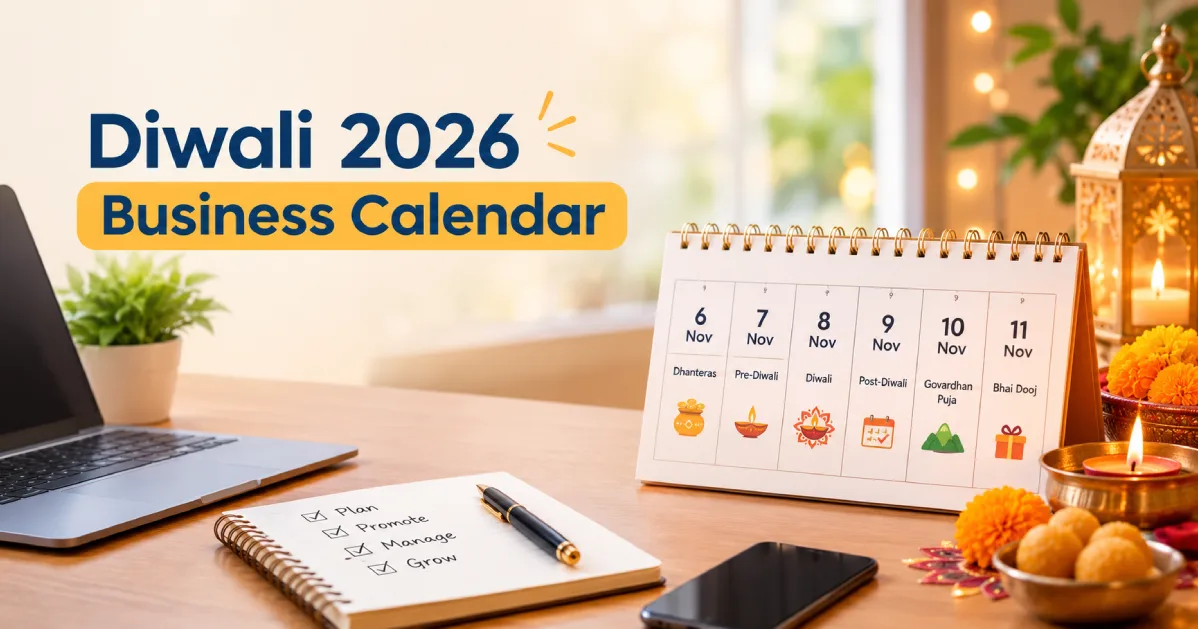
Diwali 2026 Business Calendar: What Founders Should Do Each Day From Dhanteras to Bhai Dooj
Diwali is more than a festival of lights for Indian businesses. It is also a time when customers buy things, businesses thank their employees, business owners pay outstanding bills and entrepreneurs plan for the next level of development.
The holiday season can also present a new set of opportunities for a startup founder, in the form of increased sales, better client relationships, and increased brand visibility. But if not planned appropriately, it can also lead to hasty campaigns, late orders, late payments and unnecessary costs.
This is why a Diwali 2026 business calendar could be useful for them to help manage their work and enjoy the festive season.
As per Hindu calendar, New Delhi, Dhanteras will be celebrated on 6th November, Diwali on 8th November, Govardhan Puja on 10th November and Bhai Dooj on 11th November, 2026. This is a general guide and local practice may differ.
Here we have provided you with a day to day grocery list so that Indian founders, small business owners and startups can get ready for the festive season.
Here is a quick overview of the Diwali 2026 Business Calendar.
| Date | Festival | Business Focus |
| Friday, 6 November | Dhanteras | Review your cash flow and payments. |
| Saturday, 7 November | Pre-Diwali / Kali Chaudas | Review orders and prepare for campaigns |
| Sunday, 8 November | Diwali | Express greetings and provide necessary support |
| Monday, 9 November | Post-Diwali working day | Review enquiries and customer follow ups |
| Tuesday, 10 November | Govardhan Puja | Develop and execute operations and the next business cycle |
| Wednesday, 11 November | Bhai Dooj | Appreciate relationships and reconnect with clients |
The names of festivals and days of observance may vary from region to region. Before booking business activities please consult the local calendar.
6 November: Dhanteras — Review Money and Pending Payments
The days of Dhanteras are a good time to look at the finances of your business since it's traditionally believed to encourage prosperity.
Don't only look at what you need to buy during the holiday season, examine your cash flow first.
Check out overdue customer payments, overdue bills from suppliers, salaries, subscriptions and upcoming bills. If your customers are behind on payments to your business, then send out polite reminders to pay in advance of the holiday season, when your regular communication flow is going to be interrupted.
For ecommerce entrepreneurs, see if you are making a profit from festive sales: post discounts, delivery expenses, advertising expenses and returns.
Founder’s checklist:
- Check on pending invoices and payment that is due.
- Review existing cash in hand & subsequent spending.
- Verify suppliers' payments and stock needs.
- Determine a realistic budget for holiday sales.
The aim is to come into the holiday season with a better understanding of your company's finances.
7 November: Prepare Campaigns and Check Orders
It's a great day to see if your business is prepared for the customers before Diwali.
If you have a website, try your key pages, enquiry forms, payment and contact information. Ensure that there is no ambiguity when it comes to what you provide customers.
If you're selling products, check the availability and delivery times for goods and returns. Don't offer delivery dates that you or your delivery partners cannot keep.
Prepare holiday/seasonal messaging and plan social media posts for service businesses.
Founder’s checklist:
- Test website and enquiry forms.
- Verify the stock and delivery dates and customer service.
- Make planned holiday and social media promotions.
- Make sure that discounts and offer conditions are explicitly stated.
With a little preparation, you can avoid unnecessary customer complaints during busy times.
8 November: Diwali — Build Trust and Celebrate Relationships
Diwali is a chance for one to relate with customers, employees, suppliers and business partners.
Send a friendly holiday message via your business's social media pages, email newsletter or WhatsApp Business account. Don't make all greetings sales pitches.
When you're operating a holiday campaign, ensure that customers can easily figure out the offer, how extended it lasts and any terms.
Founders need to show appreciation for their team members, too. A well-thought-out message and a reasonable workload with appreciation of employee contribution can assist in establishing a positive workplace culture.
Founder’s checklist:
- Send holiday cards to clients and associates.
- Appreciate staff and recognise their efforts.
- Maintain critical customer support should it be required.
- Track the performance of the campaign without needless modifications.
Festival work does not have to be done throughout the festival. Plan regular communications and allow your team to enjoy the celebration.
9 November: Follow Up on Enquiries and Festive Sales
Some customers may return to their usual behaviour following Diwali and begin replying to messages and making comparisons, or start making purchases.
Take this day to catch up on any enquiries that were received prior to and throughout the festival.
If a customer calls your agency about website design, but you don't get a confirmation, send a follow-up email stating that you'd love to discuss the steps forward!
Check on what has worked and what worked well in the channels for useful enquiries. Don't just measure a campaign by likes or impressions, check out leads, sales and customer conversations.
Founder’s checklist:
- Ensure that genuine customer enquiries are followed up.
- Reply to messages and outstanding support enquiries.
- Check on campaign performance and sales statistics.
- Take notes on feedback and frequently asked questions from the customers.
The objective is to make a festive message into a worthwhile relationship with customers without bombarding them with repeated messages.
10 November: Govardhan Puja — Plan the Next Business Cycle
The holiday season for most companies is followed by a "business as usual". Govardhan Puja is a helpful indication on the calendar to keep track of the upcoming events.
Review inventory, schedules of suppliers, work in progress and team availability. If your business was successful, determine which products or services were successful and if you need to make improvements to your operations.
Founders can also check their future marketing planning schedule. Don't rely on the festival for sales – make plans, communicate with customers, and do promotions over the next couple of weeks.
Founder’s checklist:
- Check any outstanding orders and deadlines for projects.
- Complete the sales / expenses / refunds, if possible, reconcile.
- Recognise successful campaigns and areas for improvement.
- Make plans for the next 2-4 weeks priorities.
This will help your business to transition from the holiday frenzy to steady progress.
11 November: Bhai Dooj — Strengthen Business Relationships
Bhai Dooj is about the relationship between siblings. It may also be a reminder to founders of the importance of relationships with other people that are good for business.
Be sure to express your gratitude to loyal customers, reliable suppliers, partners and staff. An individualized communication may be more significant than sending the same promotional message out to everyone.
The other benefit of this is that you can then see which business relationships should be strengthened. Maybe a former customer might require another service, or a supplier might make it easier for you to deliver they're services.
Continue with these conversations in a natural way. The objective is to keep the trust, and not to make every relationship a sales transaction.
Founder’s checklist:
- Say thank you to customers and business associates.
- Reconnect with previous customers as far as is appropriate.
- Discuss key partnerships and relationships with suppliers.
- Identify one goal for building a relationship for the month.
Business relationships are established and developed through mutual communication, reliability and good service throughout the year.
For Startups, some additional tips for the Diwali season.
Be sure to get your Budget Plan before you offer Discounts.
A discount can boost sales yet it can also cause a drop in profits. Estimate how much you will be spending before you start an offer and be sure the terms are understood.
Automate Routine Communication
Manage approved greetings and customer updates using scheduled emails, social media tools or features of WhatsApp Business. While automation can make processes more efficient, it should not be at the expense of message content or respecting customer preferences.
Ensure that Customer Data and Information are kept secure.
In periods of heavy campaigns, don't ask for unnecessary customer details. Pay with secure payment options and keep business accounts secure with strong passwords, and access controls.
If relevant, review Government Support.
In case your business is considering applying to any of the government schemes for start-ups, check the eligibility conditions on the official government Startup India schemes website.
Interested MSMEs facing delayed payments can also check the government's MSME Samadhaan information.
Conclusion
For founders, Diwali 2026 is not just about initiating festive offers; it's about making a meaningful impact. It's a time for checking the finances, working on customer communication, giving back to employees and planning for the next phase of business expansion.
Review money during Dhanteras, prepare and connect during the days leading up to Diwali and follow up and plan during the days following Diwali.
Above all, don't try to do it all in six days! Identify the most strategic tasks for your business, set up regular tasks and find time for the festival.
With a well-planned festive season, your business can end the year on a high note and with better relationships, organisation and priorities.
To explore more practical guides on Entrepreneurship, Startup Planning and Business Growth in India, check out Digital Startup India.


