Categories
Recent Posts

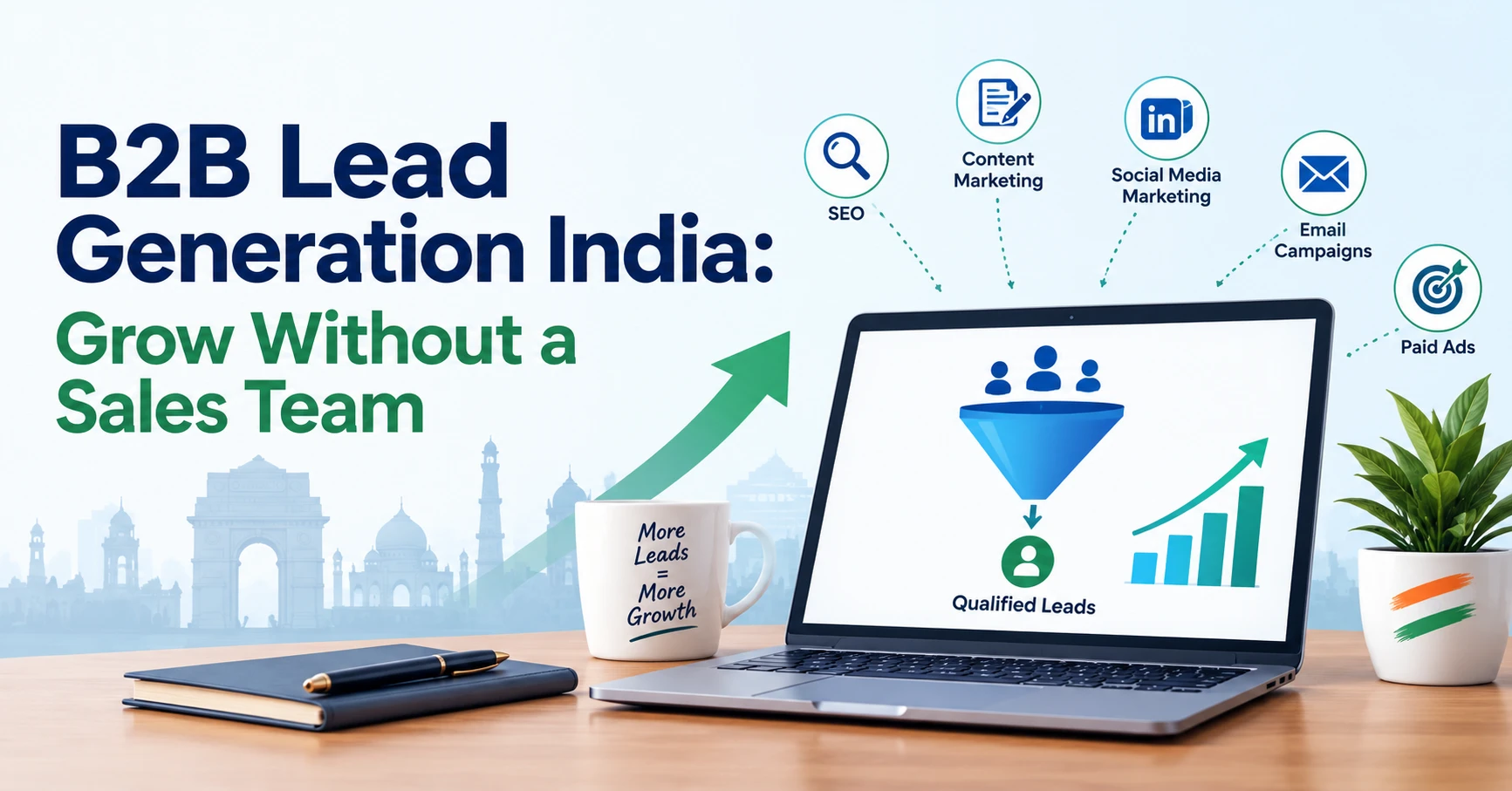




Table of Contents
B2B Lead Generation for Indian MSMEs Without a Sales Team
Most Indian MSMEs grow through word of mouth, old contacts and a few loyal clients. That works until it doesn't: a key client slows down, a season turns quiet, or the owner realises that all sales depend on one person, the founder.
Hiring a full sales team is expensive, and many small manufacturers, service providers and traders simply can't afford one. The good news is that modern B2B lead generation doesn't require a big team. With the right systems, even a 3-person company can build a steady pipeline of qualified enquiries.
This guide walks you through a practical, low-cost approach to B2B lead generation for Indian MSMEs without a dedicated sales team.
Why Lead Generation Feels Hard for MSMEs
Before the solutions, it helps to understand the usual blockers:
-
No dedicated sales person. The owner handles production, accounts and sales together.
-
Limited budget. Paid ads and agencies feel risky when margins are tight.
-
Inconsistent follow-up. Enquiries come in, but nobody follows up properly.
-
Weak online presence. Buyers search for suppliers online but can't find you.
-
Dependence on referrals. Referrals are great, but they are unpredictable and hard to scale.
The fix isn't working harder. It's building simple systems that attract and capture leads for you.
Step 1: Get Clear on Your Ideal Customer
You can't generate good leads if you don't know who you're targeting. Write down:
-
Which industries buy from you most often
-
The size of companies you serve (small, mid-size, large)
-
The job title of the real decision-maker (owner, purchase head, plant manager, CFO)
-
The problem you solve for them and the result you deliver
-
Your typical order size and sales cycle
Even a one-page document with these answers will make every later step sharper. A narrow, specific target almost always beats "we serve everyone."
Step 2: Build a Simple but Credible Online Presence
Today, a B2B buyer will usually search for you before they reply to you. Make sure what they find builds confidence.
Your minimum online setup:
-
A clean website or landing page that explains what you do, who you serve and how to contact you
-
A free Google Business Profile so you show up on Search and Maps
-
A complete LinkedIn company page
-
Listings on relevant business directories
Don't have the time to build everything from scratch? Start by adding your company to the Digital Startup India business directory, so buyers, partners and fellow founders can discover you in one place.
Step 3: Use LinkedIn as Your Digital Sales Rep
For B2B, LinkedIn is often the most effective channel for small companies because decision-makers are already there.
What to do:
-
Optimise your profile. Make your headline about the value you deliver, not just your job title.
-
Post consistently. Share case studies, behind-the-scenes production or service work, client wins, and practical tips. Two to three posts a week is enough.
-
Connect with intent. Send personalised connection requests to target buyers, not generic ones.
-
Start conversations, not pitches. After they accept, thank them and ask a genuine question before ever selling.
-
Join relevant groups and comment thoughtfully on posts by your target customers.
Spend 20 to 30 minutes a day, and you'll build visibility that works for you even while you're busy with operations.
Step 4: Run Simple, Personalised Cold Email Campaigns
Cold email still works in B2B when it's relevant and respectful.
A simple formula:
-
Short subject line that mentions the recipient's problem or industry
-
One-line personalisation (their company, product or a recent update)
-
One clear benefit you can deliver
-
One small ask, such as a quick call or permission to share a brochure
Keep emails short, avoid attachments in the first message, and follow up two or three times over a couple of weeks. Maintain a clean, opted-in or relevant list and respect unsubscribe requests, as spam complaints can hurt your reputation and may violate applicable data and communication rules.
Step 5: Make WhatsApp Business Work for You
Indian buyers love quick conversations, and WhatsApp is where many of them already are.
-
Set up WhatsApp Business with your catalogue, business hours and quick replies
-
Add a WhatsApp click-to-chat button on your website and Google profile
-
Create a short greeting and away message so no enquiry feels ignored
-
Use labels to track new leads, quotations sent and follow-ups
-
Share product updates only with people who have shown interest or given consent
Fast, friendly replies often decide who gets the order.
Step 6: Use SEO and Content to Attract Inbound Leads
Content is the closest thing to a sales team that works 24/7. When buyers search for answers, your content brings them to you.
Start small:
-
Create a page for each core product or service
-
Write blog posts that answer questions your customers ask repeatedly, such as "how to choose a [product]" or "cost of [service] in India"
-
Add case studies showing the problem, your solution and the result
-
Include a clear call to action (call, WhatsApp, enquiry form) on every page
Even one useful article a month compounds over time and keeps generating enquiries long after you publish it.
Step 7: Leverage Communities and Networks
Relationships still drive B2B in India, and online communities make them easier to build.
-
Join founder and business communities. Connect with entrepreneurs and professionals in the Digital Startup India members section to exchange referrals, partnerships and ideas.
-
Learn from real journeys. The startup stories page shows how other founders found their first customers and scaled, which can spark practical ideas for your own business.
-
Attend industry events and trade associations. Follow up within 48 hours of meeting someone.
-
Ask for referrals systematically. After every successful delivery, ask: "Who else do you know who might benefit from this?"
Step 8: Automate and Organise Your Follow-Ups
Most leads are lost not because of price, but because of silence. You don't need expensive software to avoid that.
-
Use a simple CRM or even a spreadsheet with columns for name, company, stage, last contact and next follow-up date
-
Set reminders for follow-ups on your phone or calendar
-
Create email and WhatsApp templates for common situations (introduction, quotation, follow-up, thank you)
-
Review your pipeline for 15 minutes every week
A basic system followed consistently beats a fancy tool used rarely.
Step 9: Consider Outsourcing Before You Hire
If you're not ready for a full-time salesperson, there are flexible options:
-
Freelance lead generation or telecalling specialists, paid per project or per qualified lead
-
Part-time or commission-based sales associates
-
Interns or trainees for research and outreach support
If you do decide to build a team, you can post your requirement on the Digital Startup India jobs page and reach candidates who are interested in working with startups and growing businesses.
Step 10: Protect Your Data and Reputation While You Grow
The more you collect leads, run outreach and use digital tools, the more you handle customer and business data. Treat security seriously.
-
Use strong passwords and two-factor authentication on your CRM, email and social accounts
-
Be careful about what business and personal information you feed into AI tools
-
Don't share sensitive client data casually on chat apps
For real-world context, read how a Gemini AI vulnerability affected companies and why the 1980s AI photo trend can be a privacy risk for founders. Both are useful reminders as you adopt new tools to grow.
Metrics to Track
You can't improve what you don't measure. Keep an eye on:
|
Metric |
What It Tells You |
|
Number of new enquiries per month |
Overall lead flow |
|
Lead source |
Which channel works best |
|
Response time |
How quickly you reply |
|
Enquiry-to-quotation rate |
Lead quality |
|
Quotation-to-order rate |
Sales effectiveness |
|
Cost per lead |
Whether your efforts are worth the spend |
Double down on what works and drop what doesn't.
Common Mistakes to Avoid
-
Targeting everyone instead of a specific customer group
-
Sending generic, copy-paste messages
-
Giving up after one follow-up
-
Not tracking where leads come from
-
Ignoring online reviews and reputation
-
Treating lead generation as a one-time activity instead of a weekly habit
A Simple 30-Day Action Plan
Week 1: Define your ideal customer, update your website and LinkedIn, and set up your Google Business Profile.
Week 2: List your business on directories, set up WhatsApp Business and prepare message and email templates.
Week 3: Start LinkedIn outreach and content posting. Send your first small batch of personalised emails.
Week 4: Follow up with every lead, review what worked, and ask existing clients for referrals.
Final Thoughts
You don't need a big team or a big budget to generate B2B leads. What you need is clarity about your customer, a credible online presence, a few consistent outreach habits and a simple follow-up system. Start with one or two channels, do them well, and expand as results come in.
If you'd like help getting your business discovered, you can get in touch with the Digital Startup India team. Ready to take the first step? Add your company to the Digital Startup India business directory and start building visibility today.
Disclaimer: The information in this article is for general informational and educational purposes only and does not constitute legal, financial or professional business advice. Marketing platforms, tools, policies and applicable laws, including those related to data protection, email and messaging, change over time, so please review the latest rules and guidelines before running outreach campaigns. Results from lead generation activities depend on many factors such as industry, offer, competition and execution, and Digital Startup India does not guarantee any specific leads, sales or business outcomes. Digital Startup India is not affiliated with any third-party platforms mentioned. Links to internal and external pages are provided for convenience and reference.