Categories
Recent Posts




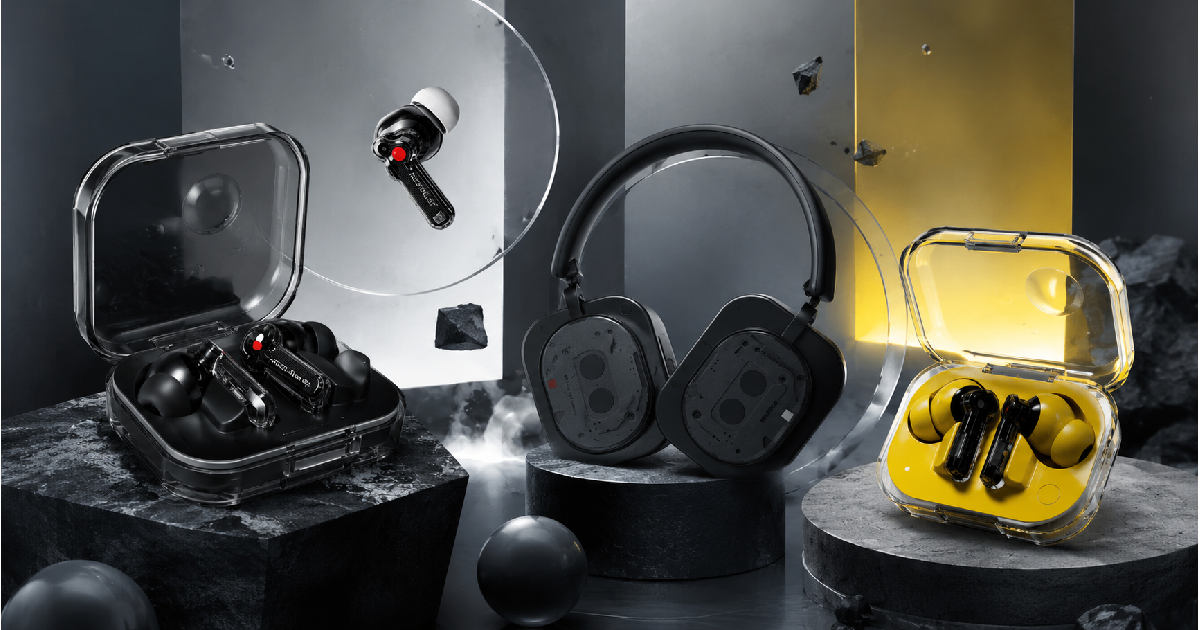
Table of Contents
Nothing Technology Case Study: 7 Lessons for Indian Founders
Most consumer electronics startups die quietly. They launch one good product, run out of cash, and get forgotten.
Nothing did the opposite.
A London company started in 2020 walked into a market ruled by Apple, Samsung, Sony, and — in India — boAt. Five years later it has raised roughly $539 million, sits at a $1.3 billion valuation, and is one of the fastest-growing consumer tech brands in India.
This Nothing Technology case study is not written for gadget reviewers. It is written for founders, business owners, and operators who want to understand how a brand with no factory advantage, no ecosystem lock-in, and no legacy distribution built demand from scratch — and what parts of that playbook you can copy in your own business.
We will cover the latest Nothing technology news, the wireless earbuds market trends behind their growth, a plain-English breakdown of Nothing X app features and their audio hardware, honest product comparisons, and finally the seven business lessons that actually matter.
What Is Nothing? A 2-Minute Founder's Brief
Nothing Technology is a British consumer electronics company founded in 2020 and headquartered in London. Its co-founder, Carl Pei, previously co-founded OnePlus — which means he had already run the playbook of building a challenger phone brand in India once before.
Here is the company at a glance:
| Metric | Detail |
|---|---|
| Founded | 2020 |
| Headquarters | London, United Kingdom |
| Co-founder | Carl Pei (ex-OnePlus) |
| Total capital raised | ~$539 million across 8 rounds |
| Latest valuation | ~$1.3 billion (Series C, $200 million) |
| First product | Ear (1) earbuds, 2021 — launched in India at ₹5,999 |
| Core categories | Audio, smartphones, and now AI devices |
| Sub-brand | CMF by Nothing (budget line) |
Notice the sequence. Nothing did not launch with a smartphone. It launched with a pair of earbuds at under ₹6,000.
That single decision is the most important thing in this entire article, and we will come back to it in the lessons section.
Latest Nothing Technology News in 2026
If you are studying this company, you need the current picture — not the 2022 hype cycle. Here is where Nothing stands in August 2026.
The AI pivot is now official strategy
Nothing raised $200 million in Series C funding specifically to build what Carl Pei calls "AI-native devices" — hardware designed around AI from the ground up, not phones with an AI button bolted on.
Reports from mid-2026 suggest the company's next big bets are AI wearables, headphones, and smart speakers, with smartphones moving slightly to the back burner in terms of strategic focus.
AI smart glasses planned for 2027
Bloomberg reported in March 2026 that Nothing is developing AI-enhanced smart glasses, targeted for release in the first half of 2027. That would put Nothing in direct competition with Meta, and eventually with whatever Jony Ive and OpenAI ship.
A smartwatch may be close
Multiple outlets reported in July 2026 that Nothing is working on its first smartwatch, tipped for a September launch at under $300.
Six smartphones planned for 2027
In an August 2026 interview, Nothing's Akis Evangelidis said the company launched three smartphones in 2026 — the Phone (4a), Phone (4a) Pro, and Phone (4b) — and plans to launch roughly twice that number in 2027, alongside a wider range of device categories.
India is a priority market, not a side market
Three important India-specific signals:
- Nothing has confirmed plans for two new physical retail stores in India.
- Nothing and Google Pixel have been reported as the fastest-growing smartphone brands in India.
- The Phone (4b) launched in India with a larger battery than the international model, and Nothing ran a limited RCB (Royal Challengers Bengaluru) Edition — a very deliberate India-first cricket play.
Founder takeaway: Nothing treats India as a design input, not a dumping ground for global stock. If you sell in India, that difference is worth studying.
Wireless Earbuds Market Trends: The Opportunity Nothing Spotted
Nothing did not get lucky. It entered a category that was already compounding.
Understanding these wireless earbuds market trends explains the entry strategy better than any brand story.
The India numbers
| Metric | Figure |
|---|---|
| India wireless audio market (2026) | ~$3.86 billion |
| Projected market (2031) | ~$8.68 billion |
| CAGR (2026–2031) | ~17.6% |
| TWS share of category revenue (2025) | ~64.9% |
| TWS segment CAGR to 2031 | ~19.1% |
| Online channel share (2025) | ~73.6% |
| Entry segment (under ₹1,500) share | ~51.6% |
| boAt's share of 2024 shipments | ~32.9% |
| boAt + Noise + Boult combined | ~42.6% |
What these numbers actually tell a founder
1. The category was growing fast enough to hide mistakes. A 17–19% CAGR means even a mediocre operator grows. Nothing entered a rising tide.
2. Online dominance lowered the entry barrier. With around 73.6% of sales happening online, Nothing did not need 40,000 retail counters to compete with boAt. It needed Flipkart, Amazon, and a good product page. This is the single biggest reason a foreign startup could enter India's audio market at all.
3. The market was bottom-heavy and top-empty. Over half the market sits under ₹1,500. That means the ₹5,000–₹15,000 segment was crowded with global brands charging premium prices and Indian brands mostly competing on price. There was room for a brand that felt premium but priced sanely.
4. The leaders were vulnerable at the top. boAt built a massive base with first-time buyers. But research suggests that as first-time buyers upgrade, brands built purely on entry-level volume face share pressure from feature-rich competitors. Nothing aimed exactly at that upgrade moment.
5. AI features are now the differentiator. The 2026 story in audio is AI noise cancellation, live translation, spatial audio, and on-device recording. Brands including OnePlus and realme posted over 20% annual shipment growth in India partly on the back of affordable AI-enabled features.
Features of Nothing Audio Products, Explained Simply
If you are a founder rather than an audiophile, here is what Nothing's audio hardware actually does — and why each feature exists commercially.
Transparent design
Clear plastic shells that show the internal components. This is Nothing's signature. It costs almost nothing extra to manufacture but makes the product instantly recognisable in a thumbnail on Flipkart. That is the point. It is a marketing asset disguised as a design choice.
Active Noise Cancellation
Up to 45dB of hybrid ANC on the current generation. In plain English: it cancels low-frequency noise like traffic, aircraft cabins, and office AC hum.
Nothing Ear (3): the flagship
Launched in late 2025 at around $179, the Ear (3) brought a 12mm dynamic driver, 45dB hybrid ANC, LDAC and Hi-Res audio support, six microphones, and a "Super Mic" built into the charging case for clearer outdoor calls. Reviewers praised the ANC and sound, though the Super Mic drew mixed reactions in testing.
Nothing Ear (3a): the volume driver
Launched 7 July 2026 at $99, the Ear (3a) is the successor to the hugely popular Ear (a) — Nothing skipped "Ear (2a)" entirely. Its headline features:
- 32MB of built-in flash storage (16MB per earbud), very rare at this price
- Audio Snapshot: pinch both earbuds to save up to 60 seconds of whatever you are listening to, with a configurable pre-roll buffer of 0, 15, or 30 seconds before the trigger
- Native call and meeting recording directly from the earbuds, with an audible tone so the other party knows recording is active
- 12mm driver, 45dB wideband ANC, Bluetooth 6.0
- Up to 10 hours playback with ANC off (42 hours with case); around 6 hours with ANC on (25 hours with case)
- 5 minutes of charging gives roughly 1 hour of playback
- IP54 rating, new XS ear tip size, new LED status matrix on the case
- Three months of free Pro audio transcriptions included
Important for Indian buyers: as of the Ear (3a)'s July 2026 global launch, it had not launched in India. Check the official Nothing India site for current availability before you buy.
Why the Ear (3a) matters to entrepreneurs specifically
Read that feature list again as a business owner, not a consumer.
Pinch your earbuds, record a client call, a site visit, a lecture, or a sudden idea in traffic. It syncs to your phone. It gets transcribed. You turn the key line into a shareable quote card.
That is a productivity device, not just a music device. Nothing has quietly repositioned budget earbuds as a capture tool for people who think out loud. For founders who spend half their day on calls, that is a genuinely useful workflow.
Nothing X App Features: Software as a Moat
Here is the part most competitors miss. The Nothing X app features are arguably a bigger competitive advantage than the hardware.
Hardware gets copied in nine months. Software compounds.
Core Nothing audio app features
| Feature | What it does | Why it matters commercially |
|---|---|---|
| 8-band parametric EQ | Fine-grained frequency control with adjustable Q values | Serves enthusiasts without a second SKU |
| Simple 3-band EQ | Easy bass, mid, treble for normal users | Same product, two audiences |
| Personal Sound | Runs a hearing test and builds a custom profile | Personalisation equals perceived premium |
| Bass Enhancement | Dial bass up or down | Fixes the top review complaint without a hardware change |
| EQ profile sharing | Share your tuning with other users | Free user-generated marketing |
| Ear tip fit test | Checks your seal | Reduces "bad ANC" returns and refunds |
| Find My Earbuds | Plays a sound to locate them | Cuts a common support ticket |
| Dual device connection | Connect to two devices at once | Laptop plus phone, the founder use case |
| Firmware updates | Adds features after purchase | The product improves after you have paid |
| Recording sync and transcripts | Snapshots and calls sync, then transcribe | Creates a subscription upsell path |
| Quote cards | Turn a transcript moment into a shareable card | Every user becomes a distribution channel |
| ChatGPT quick access | On Nothing phones, hands-free AI | Ecosystem lock-in |
Reviewers have repeatedly called Nothing X one of the best companion apps in the wireless audio space, and that reputation is doing real commercial work.
Founder takeaway: Nothing ships hardware that gets better after purchase. That kills buyer's remorse, generates repeat word-of-mouth, and with paid Pro transcriptions it opens a recurring revenue line from a one-time hardware sale.
Ask yourself the equivalent question about your own business: what can you keep giving a customer after they have already paid you?
Nothing Technology Headphone Range: Going Premium
The Nothing technology headphone category is the brand's move up the value chain.
Nothing Headphone (1)
Nothing's first over-ear headphones, launched globally alongside the Phone (3):
- Around $299 globally, roughly ₹20,000 to ₹22,000 in India (prices have fluctuated, so verify before purchase)
- 40mm custom dynamic drivers with a bespoke suspension system
- Sound tuned in partnership with KEF, the respected British audio company
- Up to 80 hours of battery life
- ANC and transparency mode
- Distinctive cassette-inspired transparent design with physical controls instead of touch panels
The KEF partnership is a masterclass in borrowed credibility. Nothing had no heritage in over-ear audio, a category where heritage is everything. Rather than spending a decade building it, they partnered with a brand that already had it.
Headphone (a)
Nothing has been teasing a more affordable over-ear model called Headphone (a). Details were still limited at the time of writing, so check the official site for confirmed specifications and India pricing.
Compare Nothing Ear and Sony WF-1000XM5
This comparison is really about positioning strategy, so read it that way.
| Factor | Nothing Ear (3) | Sony WF-1000XM5 |
|---|---|---|
| Approx. global price | ~$179 | Launched ~$299, now heavily discounted |
| ANC | Up to 45dB hybrid | Widely rated best-in-class |
| Driver | 12mm dynamic | 8.4mm Dynamic Driver X |
| Codecs | LDAC, Hi-Res | LDAC, DSEE Extreme upscaling |
| Design | Transparent, highly distinctive | Understated, professional |
| Companion app | Nothing X, clean with 8-band EQ | Sony Sound Connect, deep but heavier |
| Call quality | 6 mics plus case Super Mic | Excellent, strongly rated |
| Best for | Design-led buyers who want most of the flagship experience | Frequent flyers and audio purists |
One important 2026 update: Sony has moved on to the WF-1000XM6, which reviewers rate as the best overall true wireless earbuds of 2026 for ANC and microphone quality. That makes the WF-1000XM5 the previous flagship, and often a discounted one.
The strategic read: Nothing is not trying to beat Sony on audio engineering. Sony has decades of R&D that a five-year-old startup cannot replicate. Nothing instead competes on design, price-to-feature ratio, and software experience.
Founder lesson: When a competitor is better than you on one axis, do not fight there. Change the axis of comparison.
Compare Nothing Ear and AirPods
| Factor | Nothing Ear (3) | Apple AirPods Pro |
|---|---|---|
| Approx. price | ~$179 | ~$249 (Pro 3) |
| Platform | Excellent on Android, works fine on iOS | Best on iPhone, limited on Android |
| Codec support | LDAC and Hi-Res | AAC only, no LDAC or aptX |
| EQ control | Full 8-band parametric EQ | Minimal user EQ |
| Health features | None | Heart rate sensing on Pro 3 |
| Ecosystem | Nothing phones, Nothing X app | Deep Apple ecosystem integration |
| Design | Transparent, conversation-starting | Iconic, universally recognised |
The honest verdict: If you own an iPhone, Apple Watch, and MacBook, AirPods win on convenience and it is not close. That ecosystem integration is the moat.
If you are on Android, which is the overwhelming majority of India, Nothing offers better codec support, far more control, and a lower price.
Founder lesson: Nothing found the customers Apple structurally cannot serve well. Android users get treated as second-class citizens by AirPods, and Nothing built a business in that gap.
Where is the gap your biggest competitor is structurally unable to close? That is your market.
Compare Nothing Ear (a) vs Nothing Ear (2)
This is the most instructive comparison in the entire lineup, because it is a lesson in product line strategy.
| Factor | Nothing Ear (a) | Nothing Ear (2) |
|---|---|---|
| Positioning | Affordable, youth-focused | Premium flagship of its generation |
| Launch price in India | ~₹7,999 | ~₹9,999 |
| Driver | 11mm dynamic | 11.6mm dynamic |
| ANC | Up to 45dB | Up to 40dB |
| Battery (buds plus case) | Up to ~42.5 hours | Up to ~36 hours |
| Wireless charging | No | Yes |
| Signature colour | Bright yellow | Black and white only |
| Water resistance | IP54 | IP54 (buds) |
Look at that table carefully. The cheaper model beat the flagship on ANC and battery life.
That looks like a mistake. It was not.
Nothing understood that its buyers cared more about noise cancellation, battery, and colour than about wireless charging. So the budget model won on the specs that drive purchase decisions, while the flagship kept the premium conveniences.
The result: the Ear (a) became one of Nothing's bestselling audio products and a major volume driver. It was successful enough that its 2026 successor, the Ear (3a), skipped a generation number entirely to align with the flagship naming.
Founder lesson: Your cheaper tier should not be your flagship with features amputated. It should be a different set of trade-offs aimed at a different buyer. Most Indian D2C brands get this backwards and cannibalise themselves.
7 Business Lessons for Indian Entrepreneurs from This Nothing Technology Case Study
This is the section to bookmark.
Lesson 1: Enter through the cheap door
Nothing wanted to sell smartphones. It launched earbuds at ₹5,999.
Why? Earbuds are a low-risk purchase. A customer will gamble ₹6,000 on an unknown brand. They will not gamble ₹60,000. The earbuds bought Nothing three things it could not buy with money: real customers, real reviews, and real distribution relationships.
By the time the phone arrived, the brand was no longer unknown.
Apply it: If your end goal is a high-ticket offer, build a low-ticket entry product first. Consulting firms sell workshops before retainers. SaaS companies sell tools before platforms. Get the customer relationship cheaply, then expand it.
Lesson 2: Be visually unmistakable
Transparent shells cost almost nothing extra. But they mean a Nothing product is identifiable in a 200-pixel thumbnail, in a blurry Instagram story, from across a metro coach.
In a market where over 73% of sales happen online, thumbnail recognition is a distribution advantage.
Apply it: Pick one visual signature — a colour, a shape, a packaging texture — and never break it. Consistency beats cleverness.
Lesson 3: Build the software layer nobody expects
Every competitor at ₹8,000 ships earbuds. Very few ship a genuinely excellent app with parametric EQ, hearing personalisation, fit testing, and transcription.
Hardware gets cloned in months. A software experience with years of iteration behind it does not.
Apply it: Whatever your core product, ask what layer sits around it that competitors are ignoring. Onboarding, dashboards, community, support. The layer is usually cheap to build and expensive to copy.
Lesson 4: Borrow credibility instead of building it
Nothing had zero heritage in over-ear headphones. So it partnered with KEF, a brand with real audio pedigree, and inherited instant legitimacy in a category it had never touched.
Apply it: Certifications, co-branded launches, respected advisors, credible clients. You do not have to earn every scrap of trust from scratch. You can borrow some.
Lesson 5: Localise deeply, not superficially
Nothing shipped the Phone (4b) in India with a larger battery than the global model. It ran an RCB cricket edition. It is opening physical stores here. It priced the Ear (1) roughly 20% cheaper in India at launch.
That is not translating your website into Hindi. That is changing the product for the market.
Apply it: Localisation is a product decision and a pricing decision before it is a marketing decision.
Lesson 6: Make the product improve after purchase
Firmware updates keep adding features to earbuds someone already paid for. That converts a one-time transaction into an ongoing relationship, and turns customers into advocates.
Apply it: What can you deliver to a customer in month three that they did not expect in month one? Build that in.
Lesson 7: Pivot toward the wave, not away from your base
Nothing is now betting hard on AI: AI-native devices, AI glasses in 2027, AI-focused earbuds, a rumoured smartwatch. It raised $200 million specifically for that pivot.
But look at how it is pivoting. Through the categories it already wins in. AI features are arriving inside earbuds and headphones, where Nothing already has customers and credibility, not in some unrelated new category.
Apply it: When a technology wave hits your industry, ride it through your existing strength. Do not abandon your base to chase it.
What Nothing Gets Wrong: The Risk Side
A case study that only lists wins is marketing, not analysis. Here is the other column.
1. The AI OS bet is enormous. Nothing has not fully clarified whether its AI-native operating system builds on Android or departs from it entirely. Building an OS from scratch is brutally hard, and plenty of well-funded companies have tried and failed against iOS and Android.
2. Strategic signals look mixed. Reports in mid-2026 suggested Nothing was de-prioritising smartphones in favour of AI devices, yet the company has also said it plans to launch six phones in 2027. Those two stories are hard to reconcile, and mixed signals can confuse both customers and investors.
3. Features can overpromise. The Ear (3)'s Super Mic drew mixed reviews, with testers finding it fell short of the marketing claims. Shipping a headline feature that underdelivers is expensive. It converts your loudest fans into your loudest critics.
4. Marketing missteps carry a real cost. Nothing drew public criticism for using AI-generated people in earbuds marketing. When your brand is built on community goodwill, community backlash hits harder than it would for a faceless incumbent.
5. India competition is brutal. boAt still commanded around 32.9% of 2024 shipments. Chinese brands including OnePlus and realme have posted over 20% annual shipment growth on affordable AI features. Nothing's positioning is squeezed from both directions.
6. The window may not stay open. Nothing's AI device push coincides with peak market interest in AI hardware, a timing advantage that will not last indefinitely.
Founder takeaway: Nothing's biggest risk is the same as its biggest strength. It moves fast and bets big. That works until one bet lands wrong.
Founder Action Checklist
Copy this into your notes and answer honestly:
- What is my ₹6,000 entry product? (Lesson 1)
- Is my brand identifiable in a thumbnail? (Lesson 2)
- What software or service layer am I ignoring? (Lesson 3)
- Whose credibility can I borrow this quarter? (Lesson 4)
- Have I changed my product for India, or just my copy? (Lesson 5)
- What do I give customers after they pay? (Lesson 6)
- Am I riding the AI wave through my strength or away from it? (Lesson 7)
- Which of my features overpromise right now?
Final Word for Founders
The most valuable thing in this Nothing Technology case study is not the transparent design or the AI roadmap.
It is this: Nothing entered a market dominated by companies with more money, better supply chains, and decades of R&D, and it won share anyway, by refusing to compete on the axes where it would obviously lose.
It did not out-engineer Sony. It out-designed them.
It did not out-ecosystem Apple. It served the users Apple ignores.
It did not out-spend boAt. It out-positioned them.
You are almost certainly in a market with a bigger competitor. That is not the problem. Fighting them on their chosen ground is the problem.
Now over to you. Which of the seven lessons is most relevant to your business right now? Tell us in the comments, we read every one.
This article is for educational and informational purposes. Product specifications, pricing, and availability change frequently, so please verify current details on the official Nothing India website before making a purchase decision. Digital Startup India is not affiliated with Nothing Technology Ltd.