Categories
Recent Posts



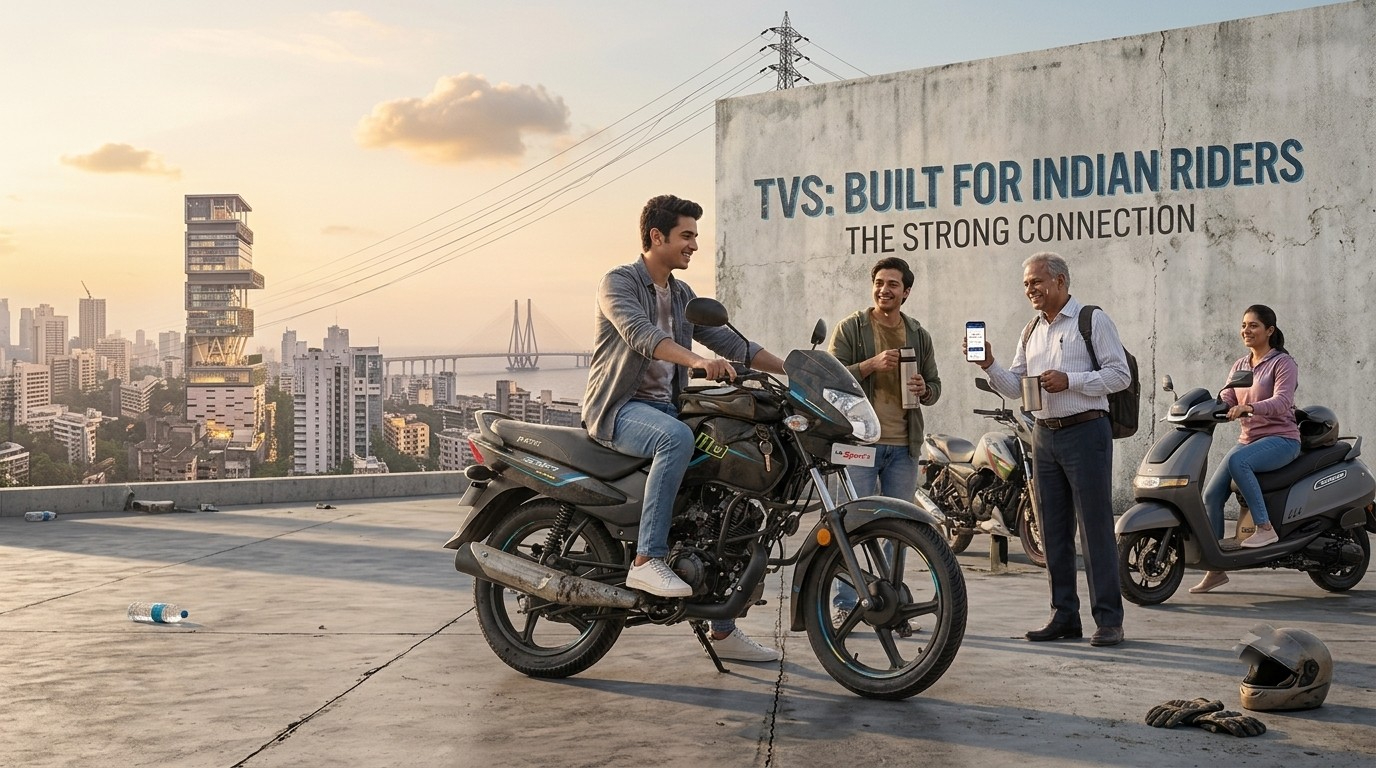
Table of Contents
How TVS Built a Strong Connection With Indian Riders
A motorcycle has become no ordinary means of transportation.
It's free, a personality, a performance and, for many riders, an identity.
TVS Motor Company was aware of this change early on. The manufacturer didn't brand all two-wheelers with the same message, but instead created various brands based on various customers; from the practical commuter, to the performance-minded rider to the rider transitioning to electric transportation.
This tactic is helping TVS to become one of the biggest two and three-wheeler manufacturers in India. TVS's total two-wheeler sales stood at 46.09 lakh and two-wheelers sold were 1.35 lakh for FY 2024-25, which is its highest sales year ever.
However, the question that interests a lot of people is not just that of the number of vehicles TVS sells.
It's the way the company sells them.
The Beginning: Selling More Than a Vehicle
Though TVS has been present in the Indian automotive market for decades, the marketing of the company has undergone a change, as a result of changing customer expectations.
For a commuter who is concerned with mileage and practicality, he or she doesn't necessarily want the same message as a young rider who is more interested in performance.
So, TVS created various product identities.
Jupiter's been focused on the practical and family-friendly use of scooters. Apache has established a reputation for performance and racing. Raider is geared towards young motorcyclists and iQube is TVS's venture into the electric mobility segment.
The segmentation is a key element of the company's marketing strategy.
Rather than build segments into a single TVS persona, TVS offers a variety of segments an opportunity to select TVS products for various reasons.
Also Read: Zoho Case Study
Apache: Turning Racing Into Marketing
TVS Racing and motorsport are intertwined to the core with Apache.
The company has not only employed racing as a sponsorship tool, but as a means of storytelling and a part of the product. The Apache range is centered around its racing roots and these influences have been in the product engineering, rider technology and customer experience.Customer experience, rider technology and product engineering are all built around the Apache roots in racing, says TVS.
This thus establishes an easy marketing tie-in:
Racing → Performance → Technology → Rider Experience
The brand is not just about the specs of the engine, it's about the lifestyle and community that it provides the rider.
The approach has been adopted beyond traditional advertising too.
According to a TVS report, the TVS Apache Owners Group has now expanded to over 3 lakh members and has hundreds of pre-selected Apache rides. According to the company, about one-fourth of the Apache buyers are upgrading within the family, who are current owners of Apache.
That's an impressive instance of community marketing!
A customer is more than just a customer.
They can become a part of the brand.
Marketing Through Experiences
Today's customers are more likely to try a product before committing to being loyal to it.
By engaging customers in riding events, racing experiences, owner communities and product experiences, TVS is bringing them closer to its brands.
With its motorsport experiences, its Apache Racing Experience has gone global, featuring riders from India, Nepal, Mexico and Colombia in its events for FY2025–26.
This way, TVS gets a sort of traditional advertising that it itself could not provide:
participation.
Anyone who goes to an event, has a connection to a community, or produces content about a motorcycle has a different connection to the brand than if they just saw an ad.
Also Read: Rapido Marketing Strategy
Personalisation Became Part of the Strategy
TVS's marketing strategy is interesting in the case of the Apache Built To Order campaign, for example.
The concept was straightforward: riders would like to have motorcycles that were more personal to themselves, but customisation was often left to local garages.
The company launched a customisation platform for the motorcycle customers to customise their motorcycles.
The campaign was delivered via social media, digital and UGC.
WARC's case study shows that the first 150 customised bikes sold out within 25 days, and the profitability of the brand went up by 30%.
The lesson has significance.
It was an opportunity for the company to say to customers: “This is the bike we made for you.”
What do you wish your bike to look like?
The little adjustment can make the marketing more personal.
Jupiter Takes a Different Route
TVS is not selling all products such as Apache.
However, Jupiter is a good example of a different way of communicating.
Convenience, comfort, practicality and the use of everyday family members have been the traditional attributes of the scooter.
TVS has gone on to launch a Jupiter campaign in 2018 following the model's recognition in the J.D. Power Two-Wheeler APEAL study as well as selling over 2.5 lakh units. The campaign was rolled out in all media including television, print and digital media and Amitabh Bachchan was the face of the campaign.
The strategy illustrates an important principle of:
There are different stories for different customers.
The rider looking for a performance-bike might react to racing and technology.
The comfort, convenience and reliability are more important to a family scooter buyer.
Can be the same company, but the marketing message varies.
TVS is not dependent on any marketing channel.
One of the key elements of the TVS marketing strategy is its versatility in the number of marketing channels.
Both traditional TV and print ads can be effective in reaching mass audiences, and digital can work well for communicating with specific audiences.
The conversation can then be extended after the ad is finished via social media, online campaigns, communities of riders, events, and user-generated content.
This results in a wider marketing process:
Advertisement → Interest → Experience → Community → Loyalty
This is far from advertising and waiting for a customer to drop by to a showroom.
Product Innovation Becomes Marketing
Good product marketing can't make up for a poor product.
TVS has been increasingly linked up the product development with its brand communication.
With newer variants, for instance, the company's current Apache variants include safety technologies, including connected displays, traction control, voice assistance and advanced lighting.
In addition, TVS is also venturing into electric mobility with the iQube.
That's important because technology can be a part of the marketing narrative.
A company can get across the idea that the motorbike or scooter is “modern” without actually taking the word out of its mouth by tackling the idea with some of the things that customers can do.
Moving Into Electric Mobility
The two way ride market is evolving and there's a new competitive field for the EV.
TVS's foray into the segment was with iQube and it has continued to work on its electric scooter portfolio.
This provides the company an opportunity to target customers that might not otherwise have ever thought of TVS only due to its petrol-powered products.
But with the challenge comes a difference.
EV customers might be interested in range, charging, software, connected features, EV battery technology, and EV ownership experience.
Thus, the marketing dialogue needs to change over time, in tune with the product.
Also Read: Zerodha Case Study
What's so special about the TVS Strategy?
There are a few basic concepts to understand TVS's marketing:
1. Different products, different stories
Apache is related to performance and racing.
Jupiter is more geared towards everyday scooter requirements.
iQube is the symbol of electric mobility and technology.
This will make the entire portfolio sound the same.
2. Build communities, not just customers
The Apache "riders" are an example of how ownership can be integrated into the marketing approach.
3. Turn technology into something customers can experience
The benefits of features are enhanced when the customers can see and use the features as opposed to just hearing about them.
4. Use experiences to strengthen the brand
Rides, events and racing, along with customisation, offer customers a chance to engage with the brand outside of the showroom.
5. Keep evolving
The two wheeler market is dynamic.
The expectations of customers, as well as technology, electric mobility and digital media are constantly evolving. TVS' product and brand activity in recent times reflects its efforts to retain its marketing in lockstep with the changes.
The Bigger Marketing Lesson
The greatest takeaway from TVS is not to be taken as a motorbike lesson.
It's the power of comprehending why people purchase from different customers.
While a company might have dozens of products, it doesn't necessarily have a dozen different marketing messages for them, so customers might not be able to tell what each product has to offer them.
Instead, TVS has developed an array of brand personas for each of its products and audiences.
It works in the areas of advertising, technology, experiences, communities, races, digital communication and product innovation.
It's possible, then, that this is why its marketing strategy should be studied.
Effective marketing isn't necessarily where it comes down to the big, noisy ad.
At times, it's about building a product narrative which customers can envision themselves being part of.
Sources & Disclaimer
This article is independently written for informational and educational purposes using publicly available information about TVS Motor Company and its marketing activities. Company figures, product information, campaigns and business details may change over time.
Primary Sources:
This article is not affiliated with, sponsored by, or officially endorsed by TVS Motor Company. All trademarks, brand names and company names belong to their respective owners.